The Neuro-Performance Edge: Synchronizing Cognitive Nootropics - Featured image for article about steroid education
March 7, 20263 min

The Neuro-Performance Edge: Synchronizing Cognitive Nootropics

FitKolik

FitKolik

Published on March 7, 2026

How neuro-optimization strategic stimulants can enhance focus, reaction time, and the mind-muscle connection for athletes.

In the pursuit of elite performance, the boundary between the mind and the body has become increasingly blurred. While traditional sports science focused almost exclusively on muscular output and metabolic efficiency, modern athletics has shifted toward "neuro-performance." This evolution centers on the ability of an athlete to maintain razor-sharp focus, rapid reaction times, and precise motor control under extreme physical fatigue. Central to this shift is the strategic use of cholinergic compounds and cognitive enhancers, designed to optimize the nervous system's role in physical execution.

The Foundation: Choline and the Mind-Muscle Connection

Choline is an essential nutrient that serves as the direct precursor to acetylcholine, the primary neurotransmitter responsible for signaling muscle contractions at the neuromuscular junction. During high-intensity or endurance events, plasma choline levels can drop by as much as 40%. This depletion is often a hidden cause of "central fatigue," where the brain's ability to send signals to the muscles weakens even if the muscles themselves still have fuel.

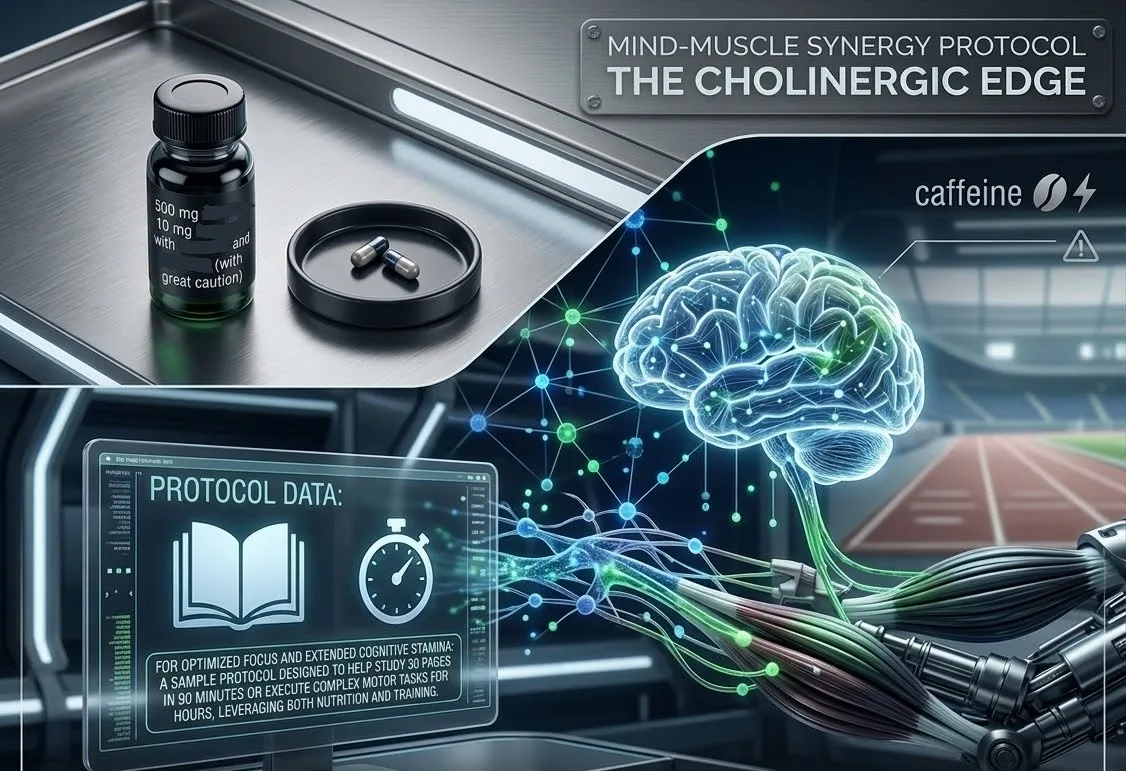
By maintaining adequate choline levels through supplementation—specifically targeting dosages around 500 mg—athletes can ensure the integrity of the mind-muscle connection. This provides two distinct advantages:

  • Visuomotor Accuracy: Enhanced hand-eye coordination and spatial awareness during technical maneuvers.

  • Sustained Power: Preventing the degradation of signal speed from the brain to the muscle fibers during the final stages of a competition.

Synthetic Precision: The Role of Noopept

While choline provides the raw material, synthetic dipeptides like Noopept act as precision tools for neuro-optimization. Noopept is known for its high bioavailability and its ability to influence the expression of Nerve Growth Factor (NGF) and Brain-Derived Neurotrophic Factor (BDNF).

For an athlete, the benefit of a low-dose (10 mg) Noopept protocol is not just "studying" or "memory," but rather the enhancement of "flow state" and tactical processing. In sports requiring rapid-fire decision-making—such as combat sports, tennis, or downhill cycling—Noopept helps manage the cognitive load, allowing the athlete to process external stimuli without the mental fog that often accompanies high-cortisol environments.

Synergistic Stimulants: Caffeine and Nicotine

The inclusion of stimulants like caffeine and nicotine in a performance protocol is common, yet they require surgical precision. Caffeine is perhaps the most validated ergogenic aid in existence, known to lower the rate of perceived exertion (RPE) by blocking adenosine receptors. This makes a grueling workout feel objectively easier.

Nicotine, when used in isolated, non-combustible forms (like low-dose buccal troches), acts as a powerful nicotinic acetylcholine receptor agonist. When combined with caffeine, it creates a dopaminergic synergy that heightens motivation and alertness. However, for athletes, the "great caution" warned by experts is literal:

  • Vasoconstriction: Excessive use can restrict blood flow to the muscles.

  • Heart Rate Variability: Over-stimulation can lead to tachycardia and a drop in HRV, hindering recovery and fine motor precision.

Integrating the Protocol

Optimizing for the "90-minute window" of peak performance requires a balanced approach. A protocol involving 500 mg of Choline and 10 mg of Noopept creates a stable cholinergic baseline, while cautious use of stimulants provides the acute "spark" for competition.

The goal is a state of "relaxed alertness"—where the body is primed for explosive movement, but the mind remains calm enough to execute complex strategies. As sports transition further into the realm of the neurological, the athletes who master their internal chemistry will be the ones who maintain their edge when the physical body begins to fail.