
In high-performance athletics, physiological adaptation depends not only on training load, but also on cellular recovery, metabolic efficiency, and vascular integrity. While macroscopic macronutrient timing—carbohydrates, protein, and essential fats—receives primary attention in sports nutrition, micronutrient and phytochemical strategies often dictate the boundary between overtraining and optimal performance.
Among emerging dietary tools, grape seed oil (Vitis vinifera) and its active polyphenolic compounds, specifically Oligomeric Proanthocyanidin Complexes (OPCs), have drawn attention for their unique lipid-modulating, anti-inflammatory, and cardioprotective qualities. When integrated strategically alongside animal-derived omega-3 fatty acids, grape seed extract and oil present a valuable combination for athlete health and metabolic optimization.
1. Bioactive Composition: The Power of Proanthocyanidins
Grape seed oil is extracted from the seeds of grapes discarded during winemaking. It features a favorable fatty acid profile dominated by linoleic acid (an essential omega-6 fatty acid) alongside oleic acid, tocopherols (Vitamin E), and trace phenolic constituents. However, the true biological leverage of grape seed derivatives lies in their concentrated levels of Proanthocyanidins.
Proanthocyanidins are a class of condensed tannins—flavonoids with potent antioxidant capacity. Their radical-scavenging potential significantly exceeds that of standard antioxidants such as Vitamin C and Vitamin E. For athletes under sustained mechanical and metabolic stress, OPCs provide targeted defense against exercise-induced oxidative stress without blunting fundamental training adaptations.
2. Lipid Profile Modulation and Vascular Health in Endurance and Resistance Athletes
Severe training regimes and high-calorie diets required by strength, power, and endurance athletes can inadvertently place stress on cardiovascular markers. Intense physical exertion generates significant reactive oxygen species (ROS), which can lead to lipid peroxidation—specifically the oxidation of low-density lipoproteins (LDL).
Reduction of LDL and Prevention of Lipid Peroxidation
Oxidized LDL (oxLDL) is a primary trigger for vascular endothelial inflammation and arterial plaque formation. Proanthocyanidins function directly in two ways:
-
Direct Scavenging: Neutro-activating ROS before they interact with circulating lipid particles.
-
LDL Protection: Incorporating into lipoprotein membranes, rendering circulating LDL resistant to oxidation during peak cardiac output.
Furthermore, bioactive compounds in grape seed oil inhibit key enzymes involved in hepatic cholesterol synthesis and improve clearance mechanisms, supporting lower total circulating LDL levels and a cleaner overall lipid panel.
Nitric Oxide Production and Endothelial Function
Vascular delivery of oxygen and nutrients is paramount for athletic endurance and muscular power output. Proanthocyanidins stimulate Endothelial Nitric Oxide Synthase (eNOS), increasing systemic nitric oxide (NO) bioavailability. Enhanced NO levels promote vasodilation, reduce vascular resistance, lower arterial stiffness, and facilitate efficient blood flow to working muscle tissue during intense exercise.
3. The Synergistic Combination: Grape Seed Polyphenols and Animal-Derived Omega-3s
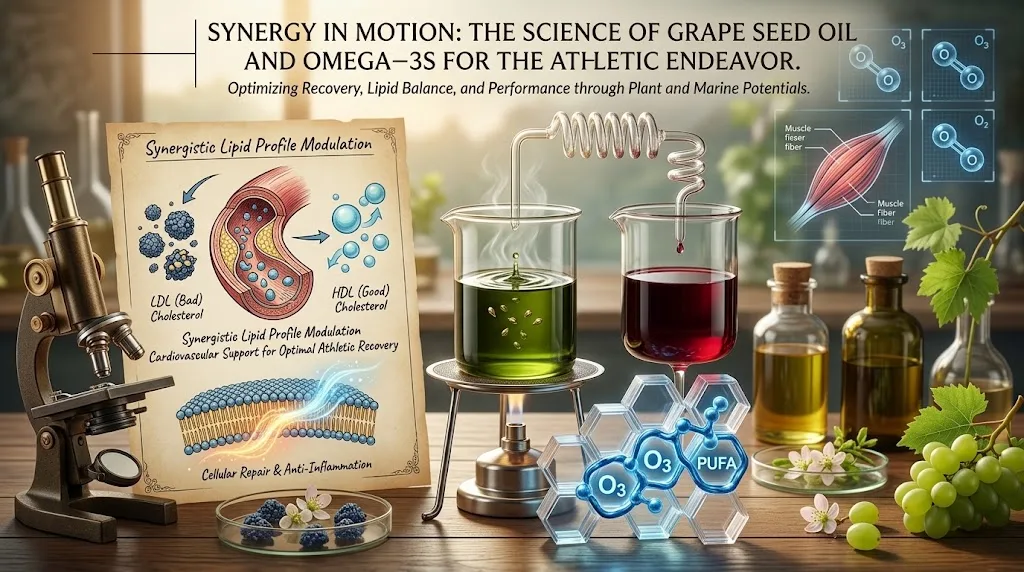
A critical insight in sports nutrition is nutrient synergy—the physiological principle where combined compounds produce a cellular effect greater than the sum of their individual contributions. A prominent example is the interaction between grape seed proanthocyanidins and animal-sourced eicosapentaenoic acid (EPA) and docosahexaenoic acid (DHA) found in fatty fish and krill oil.
       [ Grape Seed Proanthocyanidins ]  +  [ Animal Omega-3s (EPA/DHA) ]
                      │                                   │
       Decreases Oxidized LDL &                           Increases HDL &
       Inhibits Inflammatory Pathways                     Lowers Triglycerides
                      └─────────────────┬─────────────────┘
                                        │
                                        ▼
                        [ Synergistic Cardiovascular & ]
                        [  Cellular Protection in      ]
                        [      High-Load Athletes      ]
Mechanistic Synergy on HDL, LDL, and Triglycerides
-
Omega-3 Fatty Acids (EPA/DHA): Highly effective at lowering systemic triglycerides and elevating High-Density Lipoprotein (HDL) sub-fractions. EPA and DHA integrate into cellular membranes, improving fluidity and modulating inflammatory signaling via eicosanoid pathways.
-
Proanthocyanidins: Concentrate on mitigating LDL particle oxidation and strengthening structural collagen within blood vessel walls.
When co-administered, these two nutritional strategies address both sides of the lipid balance:
-
HDL Improvement & Reverse Cholesterol Transport: Omega-3s stimulate the hepatic pathway that produces functional HDL, enabling the extraction of excess cholesterol from peripheral tissues.
-
LDL Defense: Proanthocyanidins ensure that circulating LDL remains unoxidized and non-atherogenic, allowing the vascular endothelium to remain pliable and clear.
This dual action provides an effective safeguard against exercise-induced oxidative strain, preserving cardiorespiratory efficiency across heavy training cycles.
4. Implications for Muscle Damage, Recovery, and Chronic Inflammation
Intense eccentric training or high-volume endurance work induces micro-trauma in skeletal muscle fibers, followed by a localized inflammatory response. While acute inflammation is necessary for muscle repair and hypertrophy, chronic or excessive inflammation impairs muscle glycogen synthesis, increases muscular soreness (DOMS), and elevates injury risk.
Anti-Inflammatory Pathways
Proanthocyanidins downregulate key inflammatory cascades, including the Nuclear Factor kappa B (NF-κB) and Cyclooxygenase-2 (COX-2) pathways. By suppressing hyper-active inflammatory signaling, OPCs allow muscle tissue to complete the repair phase efficiently without unnecessary surrounding tissue damage.
Collagen and Connective Tissue Stabilization
Connective tissues (tendons, ligaments, and fascia) consist primarily of collagen. Proanthocyanidins exhibit a natural affinity for collagen and elastin fibers, cross-linking with protein strands to reinforce matrix structural integrity. For athletes subject to high joint impact or heavy mechanical loading, this cross-linking effect aids in tendon resilience and joint recovery.
5. Practical Guidelines for Integration in Sports Diets
To maximize the biological benefits of grape seed oil and its active compounds within an athletic protocol, consider the following dietary practices:
| Parameter | Recommendation | Rationale |
|
Culinary Use |
Cold dressings, finishing oil, or light sautes (Medium-high smoke point ~216°C / 420°F) |
Preserves heat-sensitive phenolic compounds and unoxidized fatty acid structures. |
|
Direct Supplementation |
100–300 mg daily of standardized Grape Seed Extract (GSE) yielding ≥95% OPCs |
Guarantees consistent bioactive dosage beyond variable food matrix quantities. |
|
Omega-3 Co-Ingestion |
Combine with 2–3g of combined EPA/DHA from wild-caught fish or krill oil |
Activates the synergistic modulation of HDL/LDL ratios and cell membrane integration. |
|
Nutrient Timing |
Take with main post-workout or evening meals |
Optimizes fat-soluble compound absorption and supports nocturnal tissue repair processes. |
Conclusion
Optimal athletic conditioning requires maintaining foundational cellular and cardiovascular health alongside energy production. Grape seed oil and its constituent proanthocyanidins represent a scientifically grounded intervention for protecting the cardiovascular system against oxidative stress, lowering atherogenic LDL markers, and improving endothelial function.
When paired with animal-derived omega-3 fatty acids, athletes can leverage a synergistic mechanism that supports healthy HDL levels, controls systemic inflammation, and accelerates connective tissue recovery—establishing a strong biological foundation for sustained physical performance.