
Anabolic-Androgenic Steroids (AAS) have remained one of the most polarizing topics in sports science, athletics, and strength training. While early research treated synthetic derivatives of testosterone as a single pharmacological class, modern neurobiology reveals a far more complex picture. The psychological side effects of these compounds—ranging from manageable changes in drive to severe affective shifts—depend heavily on specific chemical structures, dosages, and individual neurological baselines.
The Early Scientific Consensus
Early epidemiological and clinical investigations during the late 20th century sought to quantify the psychological risks associated with performance-enhancing drugs. Researchers like Dr. Charles Yesalis conducted groundbreaking studies to measure the prevalence of steroid use and evaluate the direct cause-and-effect relationship between compounds and hyper-aggression, colloquially known as "roid rage."
These foundational studies demonstrated that baseline administration of mild to moderate doses of standard anabolic steroids did not turn every athlete into an uncontrollable force. Instead, extreme psychiatric symptoms were observed primarily at elevated dosages or in individuals with preexisting impulsive or aggressive personality traits.
Methodological Limitations in Historical Research
Despite these findings, early clinical methodology suffered from a key blind spot: it treated anabolic steroids as a monolithic group. In controlled trials, ethical constraints restricted researchers to testing mild compounds or medically approved therapeutic doses of testosterone derivatives.
In elite athletic environments, powerlifting, and bodybuilding, individuals rarely utilize single compounds at therapeutic levels. Instead, regimes often feature high-dose "stacking"—combining multiple synthetic compounds with distinct chemical properties. Early studies largely failed to account for highly potent 19-nor-testosterone derivatives, which act on the central nervous system through entirely different pathways than mild oral steroids or bioidentical testosterone.
The Unique Neurobiology of High-Potency Compounds
Modern sports science differentiates compounds based on their affinity for androgen, progesterone, and central nervous system receptors. Two specific compounds illustrate how certain synthetic steroids drastically alter neurochemistry:
Trenbolone: A potent nandrolone derivative with an anabolic-to-androgenic ratio far exceeding that of base testosterone. Beyond muscle tissue synthesis, trenbolone crosses the blood-brain barrier and significantly alters monoaminergic pathways, influencing dopamine and serotonin receptor density. This interaction routinely manifests as heightened irritability, severe sleep disruption, elevated anxiety, and emotional dysregulation.
Mibolerone: Structurally engineered as an extremely potent oral androgen, mibolerone (historically known as "cheque drops") exhibits extreme binding affinity to androgen receptors. Due to its rapid absorption and pronounced central nervous system stimulation, it was historically used in combat sports and powerlifting immediately prior to competition to acutely elevate central drive, aggression, and fatigue tolerance.
Mechanisms of Central Nervous System Alteration
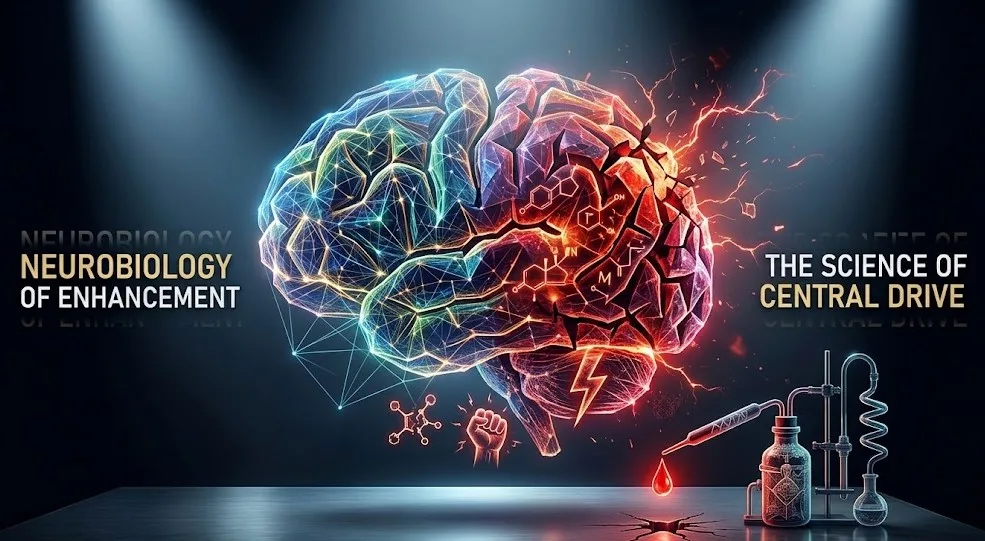
The psychological shifts caused by these advanced compounds stem from direct structural changes in the brain's emotional regulatory centers:
Hypothalamic-Amydgala Alteration: High-affinity androgens bind directly to receptors in the amygdala and hypothalamus—the primary regions governing fear, threat detection, and aggressive output.
Serotoninergic Suppression: Heavy 19-nor compounds suppress central serotonin synthesis and downregulate 5-HT receptor density, impairing impulsive control and mood stabilization.
HPA-Axis Hyperactivity: Intense androgenic signaling hyper-activates the hypothalamic-pituitary-adrenal axis, elevating systemic stress responses and keeping the nervous system in a chronic state of fight-or-flight.
Impact on Modern Athletics
In competitive sports, the boundary between physiological advantage and psychological impairment remains razor-thin. While elevated aggression and central drive can transiently enhance power output, rate of force development, and training intensity, the neurobiological cost of high-potency compounds often leads to severe drawbacks. Chronic neural excitation impairs executive function, degrades motor control under pressure, disrupts recovery through sleep architecture breakdown, and increases risk-taking behaviors both inside and outside the athletic arena.
Understanding the distinct neurochemical profiles of individual performance-enhancing compounds allows sports science professionals, clinicians, and athletes to move past generalized myths and address the true physiological realities of chemical enhancement.