The landscape of metabolic health and body composition has been fundamentally transformed by the rise of a new generation of appetite-suppressing medications. Glucagon-like peptide-1 (GLP-1) receptor agonists and dual incretin mimetics—such as semaglutide and tirzepatide—have achieved mainstream dominance for their profound weight-loss efficacy. However, as these pharmaceutical tools increasingly cross over from clinical obesity management into the realms of competitive sports, aesthetics, and athletics, a critical medical reality has surfaced: the weight loss achieved through chemical intervention is not permanent, and its cessation triggers a rapid biological rebound.
For athletes and fitness enthusiasts seeking an edge in weight-class sports, endurance, or physique optimization, relying on these medications presents a high-stakes gamble. Recent clinical data establishes that stopping these drugs causes weight to return at an accelerated rate, bringing unique, severe consequences for athletic performance and metabolic health.
The Biology of the Rebound
To understand why the weight returns so rapidly after stopping GLP-1 therapy, one must examine how these medications alter human physiology. These drugs work by mimicking natural gut hormones to slow gastric emptying and quiet "food noise"—the constant neurological urge to consume calories.
When the medication is discontinued, this chemical scaffolding disappears, triggering several physiological changes:
-
Hyperphagia (Extreme Hunger): The brain’s appetite centers, abruptly deprived of the drug's suppressing effects, respond with a compensatory spike in hunger and cravings.
-
Accelerated Gastric Emptying: Food passes through the digestive tract faster, significantly reducing the duration of post-meal satiety.
-
Metabolic Adaptation: The body interprets rapid weight loss as a starvation crisis. In response, it lowers its basal metabolic rate (BMR) to conserve energy, making it highly efficient at storing fat once normal eating resumes.
Clinical meta-analyses reveal that individuals regaining weight post-medication do so up to four times faster than those who rely solely on structured diet and exercise programs. Within 12 to 18 months of cessation, most patients regain roughly two-thirds of the lost weight, alongside a complete reversal of the positive cardiovascular and metabolic markers achieved during treatment.
The Athletic Consequence: The Loss of Lean Mass
While a rapid return to a baseline weight is discouraging for a standard patient, it can be catastrophic for an athlete. The fundamental issue lies in the composition of the weight lost and subsequently regained.
[GLP-1 Weight Loss Phase] -> Disproportionate loss of LEAN MUSCLE MASS
                                       |
                     [Medication Cessation Rebound Phase]
                                       |
                            v
   [Rapid Weight Regain] -> Disproportionate accumulation of ADIPOSE FAT
                                       |
                            v
       Result: Compromised Power-to-Weight Ratio & Lowered BMR
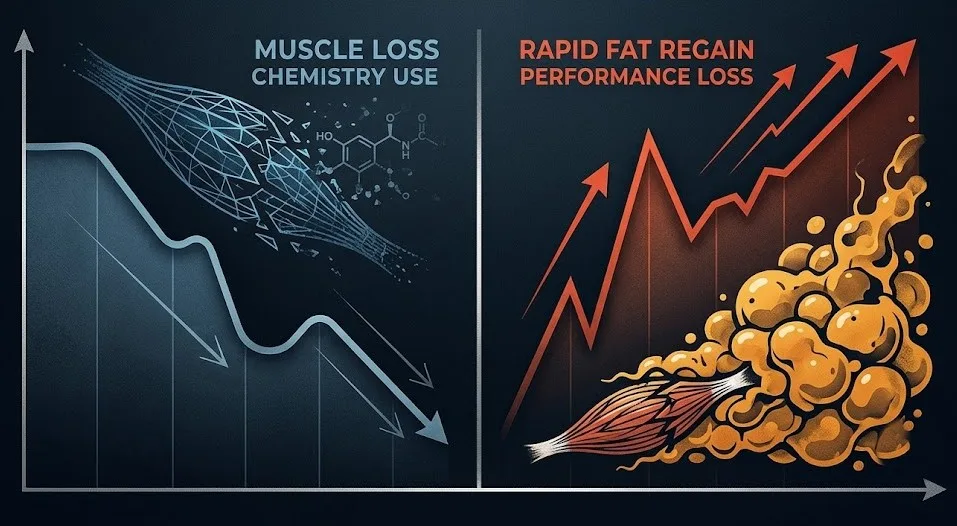
During rapid, chemically induced weight loss, a substantial portion of the dropped weight is not body fat, but lean muscle mass. For an active individual, losing hard-earned skeletal muscle directly impairs peak power output, structural stability, and anaerobic capacity.
When the medication is stopped and the rebound occurs, the weight that returns is overwhelmingly adipose tissue (fat), not muscle. This creates a worst-case scenario for performance: the athlete ends up at or near their original weight, but with a higher body fat percentage and a severely compromised power-to-weight ratio.
Performance Risks During and After Use
The use of weight-loss injections introduces physiological vulnerabilities that can severely disrupt an athlete's training lifecycle and competitive edge.
1. Relative Energy Deficiency in Sport (REDs)
Because these medications blunt hunger, athletes frequently suffer from severe, unintentional under-fueling. Depriving the body of necessary carbohydrates and proteins prevents muscle recovery, spikes cortisol, and creates chronic fatigue. This prolonged energy deficit leads to Relative Energy Deficiency in Sport (REDs), a syndrome that impairs hormonal balance, compromises bone density, and drastically elevates the risk of stress fractures.
2. Dehydration and Blunted Thirst Mechanisms
Incretin mimetics have been shown to dull the body’s natural thirst cues alongside hunger signals. Combined with the delayed gastric emptying that leaves athletes feeling bloated or fluid-logged, maintaining cellular hydration during intense training blocks becomes incredibly difficult. The result is an increased susceptibility to heat exhaustion, muscle cramping, and acute drops in cardiovascular output.
3. The Cardiovascular Reset
The rapid metabolic improvements seen during drug therapy—such as reduced resting heart rate and optimized blood pressure—are heavily tied to the active presence of the medication. Once the treatment ends, these markers revert to baseline rapidly. For an endurance or high-intensity athlete, navigating these sudden fluctuations in cardiovascular dynamics can derail aerobic pacing and recovery metrics.
Sustainability Over Chemistry
The clinical trajectory of weight-loss medications proves that obesity and metabolic regulation are chronic, biologically defended systems. These drugs do not permanently alter a person's underlying genetic or behavioral baseline; they merely suppress it. The moment the chemical intervention is removed, the body works aggressively to return to its established equilibrium.
For the athletic community, this serves as a definitive reminder that long-term physical optimization cannot be bypassed with a prescription. Sustainable body composition shifts—those that preserve lean tissue, protect metabolic rate, and enhance athletic performance—remain entirely dependent on the fundamentals of sports science:
-
Progressive Resistance Training: To stimulate muscle protein synthesis and maintain metabolic vitality.
-
Periodized Nutrition: Delivering deliberate macronutrient ratios that fuel performance rather than starving the body.
-
Behavioral and Lifestyle Sustainability: Developing lifelong habits around sleep, stress management, and dietary consistency.
Ultimately, weight-loss injections offer an illusion of progress that physiology quickly revokes upon discontinuation. For those whose lifestyles and livelihoods depend on peak physical function, the traditional pillars of structured training and intentional nutrition remain the only proven path to enduring success.