In athletic performance, resistance training, and bodybuilding, optimization strategy often centers heavily on androgenic hormones. Testosterone and its derivatives are routinely prioritized for their direct roles in protein synthesis, neuromuscular adaptation, and tissue repair. Conversely, estrogen is frequently treated as a counterproductive byproduct—a hormone to be aggressively suppressed or minimized to avoid fluid retention and maintain a hard, lean physique.
However, severe suppression of estrogen introduces a critical physiological bottleneck. Beyond its roles in bone density and lipid metabolism, estrogen is a primary upstream regulator of vascular function and blood delivery. Artificially crushing estrogen levels severely compromises the mechanism responsible for vasodilation, nutrient delivery, and the intramuscular pressure commonly known as the "pump."
The Mechanism: Estrogen and Endothelial Nitric Oxide Synthase (eNOS)
The physiological drive behind a muscle pump during high-intensity resistance training is not merely a cosmetic phenomenon; it represents a massive localized increase in blood flow, hyperemic swelling, and nutrient delivery to working myocytes. This process is heavily dependent on the signaling molecule nitric oxide (NO).
Nitric oxide is generated endogenously within blood vessels primarily via the enzyme endothelial nitric oxide synthase (eNOS). The cascade functions through clear biochemical pathways:
Estrogen ➔ Binds to Vascular Endothelial Receptors (ERα/ERβ) ➔ Activates PI3K/Akt Pathway ➔ Phosphorylates eNOS ➔ Converts L-Arginine to Nitric Oxide (NO) ➔ Triggers Vasodilation
When circulating estrogen binds to estrogen receptors (specifically $ER\alpha$ and $ER\beta$) localized in the caveolae of endothelial cell plasma membranes, it initiates a rapid, non-genomic signaling cascade. This binding stimulates the phosphoinositide 3-kinase (PI3K) / Akt pathway, which directly phosphorylates eNOS at the Serine-1177 residue.
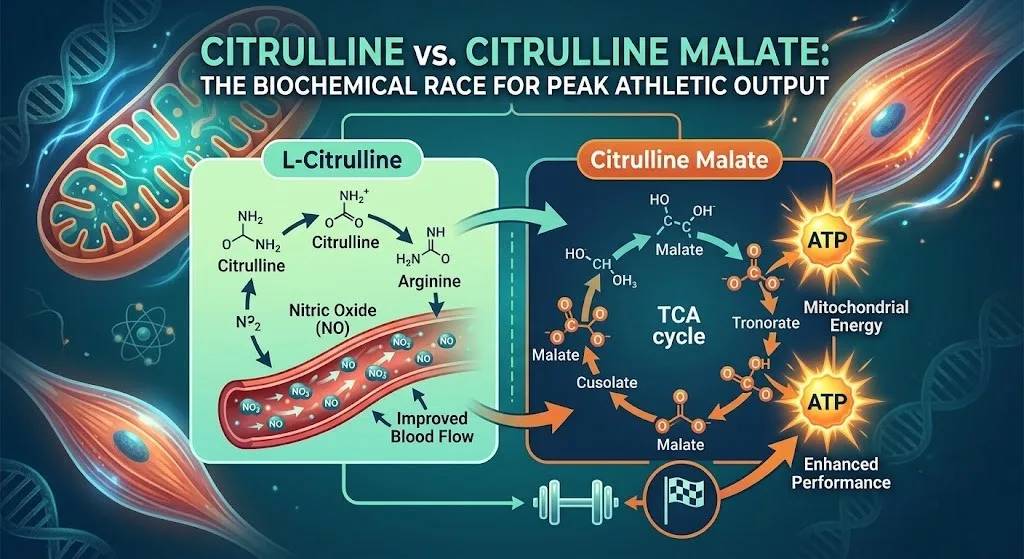
Once activated, eNOS catalyzes the oxidation of the amino acid L-arginine into L-citrulline, synthesizing gaseous nitric oxide in the process. The synthesized NO diffuses rapidly into adjacent vascular smooth muscle cells, activating soluble guanylyl cyclase (sGC) and increasing intracellular cyclic guanosine monophosphate (cGMP). This induces smooth muscle relaxation, widening the blood vessels (vasodilation) and allowing a surge of blood flow to enter active muscle tissue under mechanical load.
The Consequences of Estrogen Suppression on Athletes
When athletes utilize aggressive pharmacological strategies—such as the heavy administration of aromatase inhibitors (AIs) or non-aromatizable compounds—to suppress estrogen below healthy physiological baselines, this cascade fails.
1. Attenuation of the Hyperemic Response (The "Pump")
Without sufficient estrogen to drive eNOS activation, upstream nitric oxide production falls flat. Even if an athlete consumes massive doses of exogenous vasodilators (such as L-citrulline, nitrated supplements, or pre-workout pumps), the underlying enzymatic machinery is severely compromised. The internal cross-sectional diameter of the vasculature cannot expand optimally under stress, leading to poor localized blood pooling, muted muscle volume expansion during training, and dry, rigid vascular performance.
2. Impaired Nutrient Delivery and Metabo-Reflex
The muscle pump is a critical driver of metabolic stress, one of the primary pathways of skeletal muscle hypertrophy. The swelling of the muscle cell stretches the sarcolemma, triggering intracellular anabolic signaling cascades (such as mTORC1). Furthermore, robust hyperemic blood flow ensures that vital amino acids, glucose, and oxygen are rapidly shuttled into damaged tissues while metabolic waste products (like hydrogen ions and lactate) are cleared efficiently. Crushing estrogen directly blunts this exchange, reducing intra-workout endurance and slowing the rate of acute recovery between working sets.
3. Vascular Stiffness and Joint Vulnerability
Estrogen maintains systemic vascular compliance. When suppressed, blood vessels become less elastic and more resistant to changes in pressure. For an athlete lifting heavy loads, this increases systemic blood pressure during concentric exertions while reducing localized blood flow where it is needed most. Additionally, estrogen plays a protective role in collagen synthesis within tendons and ligaments; its absence paired with restricted blood flow significantly increases the risk of soft-tissue micro-tears and chronic joint inflammation.
Balancing the Endocrine Environment for Optimal Performance
To maximize performance, hyperemia, and tissue adaptation, sports science and endocrinological trends emphasize an optimized ratio rather than absolute suppression.
| Hormone Status | eNOS Activity | Vascular Response | Impact on Athletic Performance |
| Crushed Estrogen (<15 pg/mL) | Severely Blunted | Vasoconstriction / Rigid Vessels | Weak pumps, joint pain, impaired nutrient transport, stalled recovery. |
| Optimized Estrogen (20–40 pg/mL, or proportional to androgen load) | Maximized | High Vasodilation / Adaptive Compliance | Deep hyperemic pumps, enhanced cellular hydration, protective joint support, efficient waste clearance. |
| Excessive Estrogen (>60 pg/mL uncontrolled) | High (but offset by fluid retention) | Excessive Vasodilation / Edema | Subcutaneous water retention, lethargy, altered lipid profiles. |
An athlete's goal should be to allow estrogen to float within a healthy, functional physiological window that matches their metabolic and androgenic output. True performance optimization requires recognizing that hormones do not work in isolation. Estrogen is not an anti-muscle hormone; it is a vital, vasoactive partner required to unlock the full circulatory and hypertrophic potential of the human body under heavy physical duress.