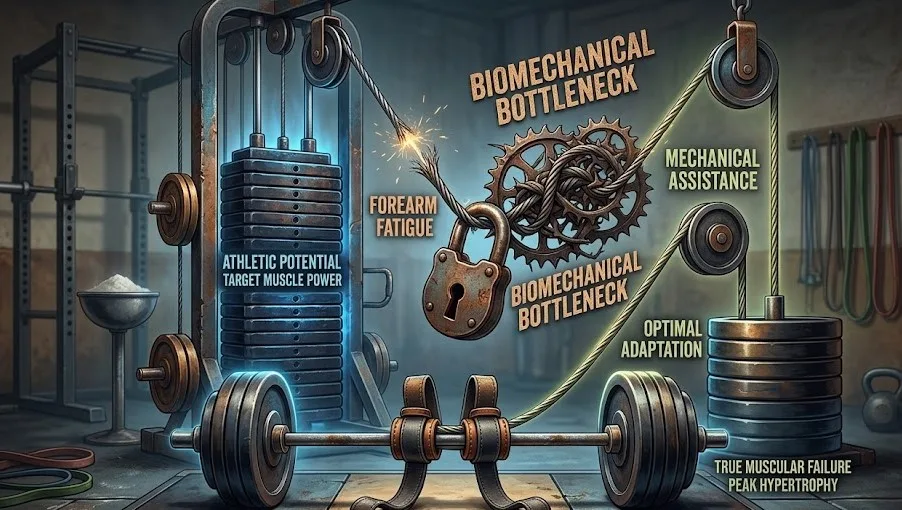

En la búsqueda de la hipertrofia y la fuerza máxima, los atletas a menudo se encuentran con una frustrante meseta: su agarre falla antes que los músculos objetivo. Ya sea al realizar peso muerto pesado, dominadas con peso o remos de alto volumen, la sensación de que los antebrazos "ceden" es una barrera fisiológica común. Este fenómeno es más que una simple molestia; es un cuello de botella biomecánico que puede estancar sistemáticamente el desarrollo de la cadena posterior y la fuerza de tracción de un atleta.
La fisiología del fallo del agarre
El cuerpo humano opera según un principio de economía neuronal. Cuando los pequeños músculos del antebrazo, específicamente el flexor superficial y profundo de los dedos, alcanzan un estado de crisis metabólica, el sistema nervioso central (SNC) interviene. A medida que estos músculos se vuelven ácidos debido a la acumulación de iones de hidrógeno y lactato, el cerebro percibe un riesgo de lesión o fallo mecánico.
Para proteger la integridad de las articulaciones, el SNC envía una señal inhibitoria que reduce el impulso neuronal a las manos. Este "apagado neuronal" paraliza efectivamente el agarre, lo que obliga al atleta a soltar el peso. El problema crítico es que este apagado ocurre mucho antes de que los músculos más grandes y resistentes de la espalda o las piernas hayan alcanzado su verdadero punto de fallo. En consecuencia, los motores primarios nunca reciben el estímulo requerido para una adaptación óptima.
El comando "Stop" y la hipertrofia
Para los atletas centrados en el crecimiento muscular, las repeticiones finales de una serie son las más "mecánicamente efectivas". Estas repeticiones reclutan unidades motoras de alto umbral que son esenciales para la hipertrofia. Si una serie de remos está destinada a ser un esfuerzo de 10 repeticiones, pero el agarre falla en la repetición ocho, los músculos de la espalda se han visto privados de la parte más productiva de la serie. Durante meses de entrenamiento, esta discrepancia resulta en un déficit significativo en volumen e intensidad, lo que lleva a un desarrollo rezagado en los grupos musculares más grandes.
Intervenciones estratégicas para el atleta moderno
Para evitar este cuello de botella, los atletas deben adoptar un enfoque de doble capa que aborde tanto el rendimiento inmediato como la integridad estructural a largo plazo.
1. Asistencia mecánica (la solución inmediata)
El uso de correas de levantamiento a menudo se debate en los círculos "puristas", pero para un atleta de alto rendimiento, son una herramienta vital. Al anclar mecánicamente la muñeca a la barra, las correas eliminan el antebrazo como un factor limitante. Esto permite al atleta:
-
Mantener un mayor tiempo bajo tensión para los motores primarios.
-
Centrarse puramente en la conexión mente-músculo con los dorsales o los isquiotibiales.
-
Alcanzar el verdadero fallo muscular en el grupo muscular objetivo.
2. Fortificación estructural (la solución a largo plazo)
Si bien las correas ayudan durante el levantamiento primario, un atleta aún debe desarrollar un agarre de "eslabón de acero" para mantener el atletismo funcional. El entrenamiento de agarre especializado debe tratarse como un accesorio dedicado:
-
Sujeciones estáticas y colgamientos muertos: Estos desarrollan la resistencia isométrica y mejoran la tolerancia del sistema nervioso a las señales de alta tensión.
-
Cargas pesadas (paseos de granjero): Este movimiento desafía el agarre bajo el estrés de la locomoción, que es altamente transferible a los deportes de campo y al atletismo de combate.
-
Variación de agarre: Utilizar un agarre neutral (palmas enfrentadas) o un agarre sin pulgar puede cambiar la línea de tracción, reduciendo ocasionalmente la demanda metabólica en los flexores del antebrazo durante las sesiones de alto volumen.
Conclusión
Un atleta inteligente no permite que un pequeño grupo muscular dicte el progreso de uno grande. Al comprender el cuello de botella biomecánico del antebrazo, puede utilizar estratégicamente herramientas como las correas de levantamiento para maximizar sus levantamientos primarios mientras dedica tiempo simultáneamente a construir un agarre irrompible. El verdadero progreso radica en la capacidad de llevar el cuerpo a su límite absoluto sin verse frenado por su eslabón más débil.