
In the intricate world of competitive sports, where the pursuit of peak performance often leads athletes to explore various physiological enhancements, the discussion around Post Cycle Therapy (PCT) and its hormonal implications is crucial. One specific area of concern and frequent misunderstanding among athletes involves the suppression of Thyroid Stimulating Hormone (TSH) following certain PCT protocols. While often alarming, this phenomenon typically has a well-understood physiological basis directly related to the medications used.
The Role of TSH and Thyroid Hormones
To understand TSH suppression, it's essential to first grasp the basic function of the thyroid axis. The thyroid gland, located in the neck, plays a pivotal role in regulating metabolism, energy production, body temperature, and overall cellular function through the hormones it produces: Triiodothyronine (T3) and Thyroxine (T4).
The production of T3 and T4 is controlled by the pituitary gland, a small gland at the base of the brain, which secretes Thyroid Stimulating Hormone (TSH). When thyroid hormone levels in the blood are low, the pituitary releases more TSH, signaling the thyroid to produce more T3 and T4. Conversely, when T3 and T4 levels are high, TSH release is suppressed, creating a finely tuned feedback loop designed to maintain hormonal balance.
PCT and the Introduction of hCG
For athletes engaging in certain performance-enhancing protocols, a critical phase known as Post Cycle Therapy (PCT) is often implemented. The primary goal of PCT is to help the body restore its natural hormonal balance, particularly endogenous testosterone production, which can be suppressed during a cycle. One of the most common compounds used in PCT for this purpose is Human Chorionic Gonadotropin (hCG).
hCG is a glycoprotein hormone that structurally resembles Luteinizing Hormone (LH), a hormone that stimulates testosterone production in the testes. By mimicking LH, hCG can help "wake up" the testes, encouraging them to resume testosterone synthesis and prevent testicular atrophy during the recovery phase.
The Mechanism of TSH Suppression: A Case of Mistaken Identity
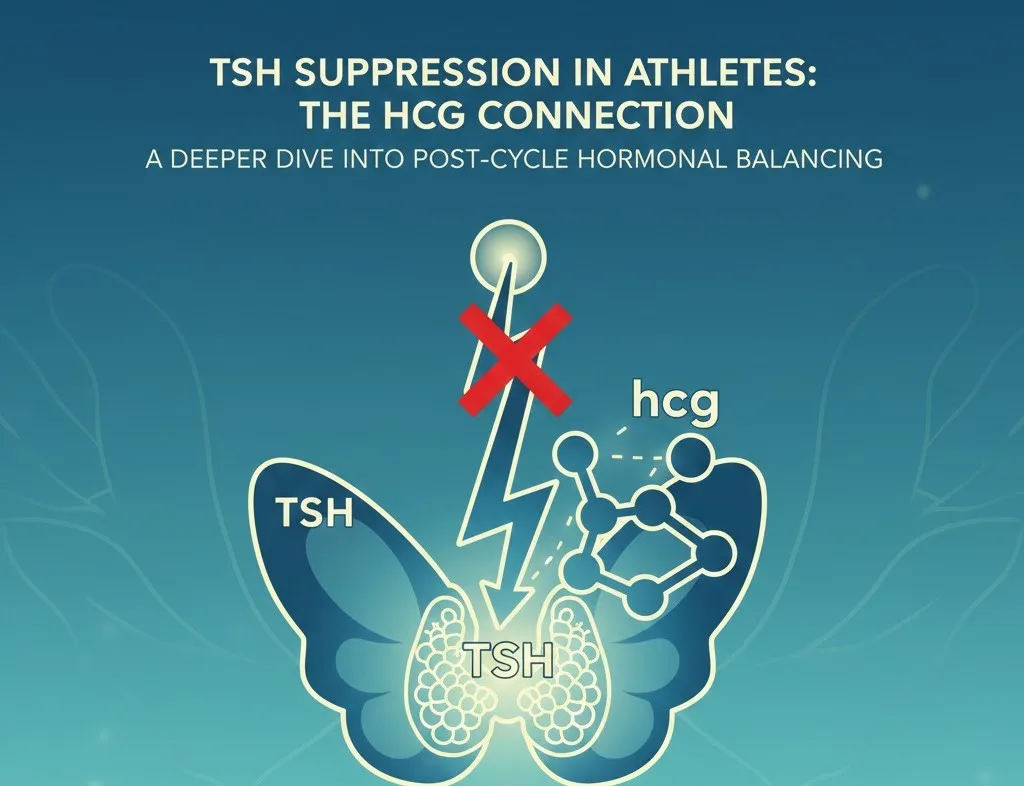
Here lies the crucial connection to TSH suppression. hCG, in addition to its structural similarity to LH, also shares a significant structural homology with TSH, particularly in its alpha subunit. This striking resemblance means that hCG can act as a thyrotropic agonist, effectively mimicking TSH and stimulating the thyroid gland directly.
When an athlete administers hCG during PCT, the high circulating levels of hCG can bind to TSH receptors on the thyroid gland. This binding stimulates the thyroid to produce and release T3 and T4, even in the absence of actual TSH from the pituitary gland. As a result:
-
Elevated Thyroid Hormones: The thyroid gland, stimulated by hCG, increases its output of T3 and T4.
-
Negative Feedback Loop: The elevated levels of T3 and T4 are detected by the pituitary gland. According to the body's natural feedback mechanism, this signals the pituitary to reduce or cease its own production of TSH, as it perceives sufficient (or even excessive) thyroid hormone activity.
-
Apparent TSH Suppression: A blood test performed during or shortly after hCG administration will therefore show significantly suppressed TSH levels, even though the thyroid gland itself may be hyperactive or functioning adequately due to the hCG stimulation.
Implications for Athletes and Health Monitoring
For athletes and their coaches, understanding this mechanism is vital to prevent misdiagnosis and unnecessary alarm. A suppressed TSH reading in the context of hCG use does not necessarily indicate primary hypothyroidism (an underactive thyroid gland) or even hyperthyroidism in the conventional sense, though the symptoms of increased thyroid activity might be present.
Instead, it often represents a transient, pharmacologically induced suppression due to the cross-reactivity of hCG. While the thyroid gland is being stimulated, the body's natural TSH feedback system is temporarily overridden.
Key Considerations for Athletes:
-
Accurate Interpretation of Bloodwork: Athletes undergoing PCT should ensure their medical professionals are aware of all substances being used, including hCG, to accurately interpret hormonal blood tests.
-
Symptom Awareness: While TSH might be suppressed, athletes should still monitor for symptoms of thyroid dysfunction, such as persistent fatigue, unexplained weight changes, altered mood, or changes in heart rate, as these could indicate underlying issues or an overzealous response to hCG.
-
Professional Guidance: Self-medication and unguided PCT protocols carry significant risks. Consulting with endocrinologists or sports medicine physicians who are knowledgeable about performance enhancement and hormonal management is crucial for safe and effective recovery.
-
Duration of Suppression: TSH suppression due to hCG is typically temporary and should normalize as hCG is cleared from the system and the body's natural hormonal axes re-establish equilibrium. However, the duration can vary depending on hCG dosage and individual physiology.
Conclusion
The phenomenon of TSH suppression in athletes during PCT, particularly when hCG is utilized, is a prime example of the complex interplay between exogenous compounds and the body's endocrine system. By understanding the structural similarities between hCG and TSH and the subsequent physiological cascade, athletes can approach their recovery phases with greater knowledge, ensuring that alarming blood test results are interpreted correctly and that their health is managed with precision and informed medical oversight.