
In the world of elite performance, the intersection of psychopharmacology and hormonal manipulation is a complex landscape. Athletes often utilize Bupropion (marketed as Wellbutrin) for its dopaminergic effects on focus and energy, or as a tool for smoking cessation. Simultaneously, those involved in strength sports may use Selective Estrogen Receptor Modulators (SERMs) like Tamoxifen or Clomiphene as part of Post-Cycle Therapy (PCT) to restore natural testosterone production.
However, a significant biochemical conflict exists between these two classes of drugs that can compromise an athlete’s recovery and long-term health.
The Mechanism of Interference: The CYP2D6 Bottleneck
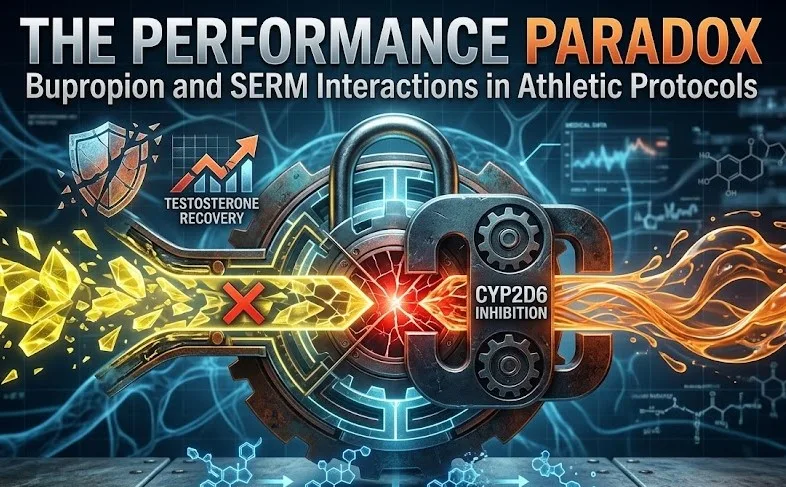
The primary issue lies in the liver's metabolic pathways. Bupropion is a potent inhibitor of the CYP2D6 enzyme. This specific enzyme is the "biological key" required to unlock the full potential of several SERMs.
-
Pro-drug Activation: Tamoxifen, for instance, is a pro-drug. It is relatively inactive in its raw form and must be converted by the CYP2D6 enzyme into its much more powerful metabolite, Endoxifen.
-
The Blocking Effect: When an athlete takes Bupropion, the CYP2D6 enzyme is effectively "occupied" or disabled. This prevents the conversion of Tamoxifen into Endoxifen.
-
Result: The athlete may be taking the correct dose of a SERM, but the blood levels of the active metabolite remain sub-therapeutic. In a PCT context, this can lead to a failure in restarting the Hypothalamic-Pituitary-Testicular Axis (HPTA), resulting in prolonged low testosterone symptoms, muscle loss, and mood disturbances.
Athletic Implications: Why This Matters
For an athlete, the stakes of this drug interaction go beyond simple biology; they affect performance markers and psychological stability.
1. Failed Hormonal Recovery (PCT)
The goal of using SERMs in sports is often to block estrogen's negative feedback on the pituitary gland, thereby signaling the body to produce more Luteinizing Hormone (LH) and testosterone. If Bupropion blunts the SERM’s efficacy, the athlete remains in a hypogonadal state longer than necessary, leading to:
-
Increased cortisol levels and muscle catabolism.
-
Persistent lethargy and reduced training intensity.
2. The Dopamine-Estrogen Balance
Bupropion increases dopamine and norepinephrine. While this can aid focus and drive, estrogen also plays a role in neuroprotection and mood. By inadvertently failing to manage estrogen receptors correctly through a neutralized SERM, an athlete might experience heightened irritability or "crashing" during a transition phase in their protocol.
3. Cardiovascular and CNS Strain
Both Bupropion and certain hormonal protocols can impact blood pressure and the central nervous system (CNS). Bupropion is known to lower the seizure threshold—a risk that may be compounded when the body is under the systemic stress of high-intensity training or fluctuating hormone levels.
Strategic Considerations for the Modern Athlete
Athletes and coaches must look beyond the individual benefits of a substance and consider the polypharmacy effect.
-
Alternative Antidepressants: If mental health support or smoking cessation is required during a hormonal recovery phase, clinicians often steer athletes toward SSRIs or SNRIs that do not heavily inhibit the CYP2D6 pathway (e.g., Citalopram or Venlafaxine).
-
Alternative SERMs: While Clomiphene also utilizes the CYP2D6 pathway, some data suggests it may be slightly less sensitive to inhibition than Tamoxifen, though the risk of reduced efficacy remains.
-
Bloodwork Monitoring: For any athlete combining these treatments, standard testosterone testing is insufficient. One must monitor LH and FSH levels to ensure the SERM is successfully signaling the pituitary gland despite the presence of Bupropion.
Conclusion
The use of Bupropion offers distinct advantages for focus and metabolic rate, but its "silent" inhibition of liver enzymes makes it a high-risk addition to any protocol involving SERMs. For the athlete, the goal is total optimization; using two substances that cancel each other out is not just a medical oversight—it is a significant barrier to maintaining the physical and mental edge required for peak performance.