-
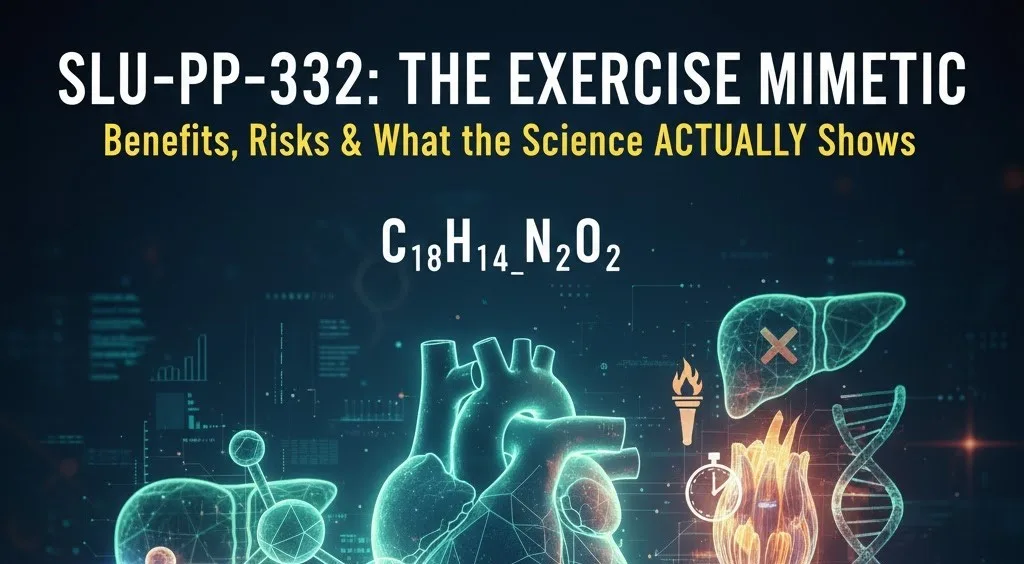
If you searched for SLU-PP-332, you’re probably trying to understand what it is, whether it works, and — most importantly — how safe it is. As a novel research compound, SLU-PP-332 is generating significant hype as an "exercise mimetic," but it carries significant unknowns.
This guide breaks down everything known so far: its scientific mechanism (ERR agonism), reported effects, serious safety risks, legal issues, quality concerns, and harm-reduction tips. No hype. No fake promises. Just clear, detailed information so readers can make smarter and safer decisions.
1. What Is SLU-PP-332? The Exercise Mimetic Breakthrough
SLU-PP-332 is a synthetic, orally available research compound that functions as a potent, pan-Estrogen Related Receptor (ERR) agonist. It is currently discussed mostly in bodybuilding communities, forums, and experimental performance-enhancement circles—it is not a mainstream, medically approved drug.
1.1. The Scientific Mechanism: ERR Agonism
The compound was developed to activate the Estrogen-Related Receptors (ERRs) (specifically ERRalpha, ERRbeta, and ERRgamma). These receptors regulate the fundamental metabolic pathways that are normally activated by intense aerobic endurance exercise.
-
Mimicking Exercise: By activating these receptors, SLU-PP-332 forces the body to shift its fuel preference towards fatty acid oxidation (fat burning). It essentially triggers the genetic program for an intense aerobic workout without requiring physical activity.
-
Chemical Identity: SLU-PP-332 has high potency, with EC50 values of 98 nM for ERRalpha. The chemical formula is C18H14N2O2.
1.2. The Source of Information
Public, peer-reviewed research on SLU-PP-332 is very limited. Most of the information available to the public comes from:
-
Early-stage lab notes and preclinical animal studies.
-
User experiences and discussions in enhancement forums.
Because of this, much of what people claim about SLU-PP-332 is anecdotal, not scientifically proven.
2. Reported Benefits & Effects (Anecdotal & Preclinical)
While controlled human data is missing, the interest in SLU-PP-332 stems from promising preclinical results and user reports.
Source Reported Effects Preclinical Data (Animal Studies) Enhanced Endurance: Allowed mice to run up to 70% longer. Dramatic Fat Loss: Reduced fat gain by 10x in obese models. Mitochondrial Health: Increased mitochondrial DNA (cellular power plants). User Experiences (Anecdotal Claims) Increased muscle fullness; Improved recovery; Possible strength enhancement; Better nitrogen retention; Quicker performance progress. Critical Note: These claims from user experiences are not controlled human studies. Treat them as possibilities, not established facts.
3. Known & Reported Side Effects (The REAL Nebenwirkungen)
Even though long-term human data is limited, the mechanism of action (ERR agonism) and user reports suggest significant risks, some similar to other anabolic/experimental compounds.
3.1. Critical Safety Concerns (Preclinical Data)
The most serious safety risks observed in animal research, particularly at higher dosages, target vital organs:
-
Cardiac Hypertrophy (Heart Enlargement): Enlargement of the heart muscle was noted in one study at higher concentrations. This is a severe risk, as ERRs are highly expressed in the heart.
-
Hepatotoxicity (Liver Stress): Elevated liver enzymes (ALT/AST) were observed in some models, indicating potential liver strain or damage.
-
Non-Selectivity Risk: As a pan-ERR agonist, it activates all three receptors, increasing the risk of unforeseen off-target effects in tissues where ERRbeta and ERRgamma dominate.
3.2. User-Reported Side Effects (Anabolic-Like)
Users have anecdotally reported side effects typical of compounds that impact metabolism and hormones:
Category Reported Issues Hormonal Side Effects Suppression of natural testosterone; Hormonal imbalance; Possible fertility impact; Changes in libido and mood. Cardiovascular Risks Decreased HDL (“good” cholesterol); Increased LDL (“bad” cholesterol); Elevated blood pressure; Possible strain on the heart. Psychological Effects Mood swings; Irritability; Aggression; Anxiety or sleep issues. Skin & Physical Acne; Oily skin; Inflammation or pain (if used as an injectable version). 3.3. The Biggest Issue: Unknown Long-Term Risks
SLU-PP-332 does NOT have long-term human safety data. This means long-term risks like cancer, permanent fertility changes, irreversible cardiac remodeling, and chronic metabolic effects are simply unknown.
4. Legal Status & Critical Quality Concerns
SLU-PP-332 sits in a “grey zone” in many countries. It is not approved for medical use, and its legality varies widely, often labeled "for research purposes only" to circumvent regulation.
The bigger and more immediate problem for the user is Quality Control:
-
Many products sold online are mislabeled.
-
Some containers contain entirely different, potentially more dangerous chemicals.
-
COAs (Certificates of Analysis) are often fake or from unknown labs.
-
Purity varies wildly, meaning the user may be exposed to toxic contaminants.
If a compound has no regulatory oversight, the real risk often comes from not knowing what chemical you’re actually getting.
5. Harm-Reduction Advice: The Smart Checklist
This checklist is crucial for anyone researching or exposed to any novel compound, focusing on safety without promoting illegal use.
-
Seek Independent Verification: Look for third-party, independent COA tests on the batch—not just tests provided by the seller itself.
-
Monitor Health Markers: Consult a medical professional to discuss lab monitoring (including lipids, liver enzymes, and hormone panels) before, during, and after exposure.
-
Avoid Stacking: Never combine SLU-PP-332 with other research or unknown compounds; this multiplies the unknown risk factors.
-
Know the Warning Signs: Stop immediately and seek emergency medical attention if signs of severe liver or cardiac stress occur:
-
Dark urine or yellowing of the skin/eyes (jaundice).
-
Severe fatigue or nausea.
-
Chest pain or shortness of breath.
-
-
Professional Recovery: Use medical guidance for hormone recovery assessments (e.g., Post-Cycle Therapy protocols) after stopping to mitigate potential hormonal suppression.
6. Safer Evidence-Based Alternatives
If the goal is muscle growth, improved recovery, or fat loss, there are numerous proven, legal, and safer options that provide real, measurable benefits without unknown long-term risks:
-
Dietary Supplements: Creatine monohydrate, Citrulline malate, Beta-Alanine.
-
Nutrition: High-protein nutrition customized to specific goals.
-
Training: Structured progressive-overload training and periodization.
-
Recovery: Adequate sleep, stress management, and active recovery programs.
Frequently Asked Questions
-
Is SLU-PP-332 safe? There is not enough scientific data to say it is safe. Preclinical reports suggest multiple possible severe risks, including to the heart and liver.
-
Does SLU-PP-332 help build muscle? Anecdotally, some users report anabolic effects, but no controlled human trials confirm this.
-
Is it legal? Legal status varies by country. It is not approved as a prescription or medical treatment.
-
Can I trust products sold online? No. Research chemicals are often mislabeled or contaminated. Purity and content are not guaranteed.
Conclusion
SLU-PP-332 is a compound surrounded by curiosity, hype, and deep uncertainty. While some users report enhanced muscle and performance, the truth is simple: research is limited, long-term safety is unknown, and potential risks to the heart and liver may be significant.
If you or your readers want reliable, science-based information, the focus must be on: understanding risks, monitoring health, prioritizing medically guided approaches, and choosing safer, proven alternatives.
Knowledge, not guesswork, is what keeps people safe.
-
December 3, 20257 min
SLU-PP-332 (Exercise Mimetic): Benefits, Dosage, and REAL Side Effects
FitKolik
Published on December 3, 2025
The COMPLETE 2025 Guide — Benefits, Dosage, REAL Side Effects, Mechanism & Safety Explained.