
In the relentless pursuit of peak performance, athletes often hyper-focus on macronutrients—proteins for repair, carbohydrates for fuel. While essential, this focus sometimes overlooks the complex biochemistry of recovery and long-term health. The real edge often lies in micronutrients, specifically the vast and diverse family of plant compounds known as polyphenols.
Many athletes turn to juicing and high-tech extracts to secure these nutrients quickly. However, emerging nutritional science suggests a critical flaw in this approach: the separation of nutrients from their original biological structure. It appears that for maximum physiological benefit, the delivery mechanism matters just as much as the nutrient itself.
The Athlete’s Need for Polyphenols
High-intensity training is a double-edged sword. It stimulates adaptation and growth, but it also generates significant amounts of reactive oxygen species (ROS), leading to acute oxidative stress and inflammation. While some inflammation is necessary to signal muscle repair, chronic or excessive inflammation can blunt recovery, impair immunity, and lead to overtraining injuries.
This is where plant polyphenols enter the equation. These naturally occurring compounds—including flavonoids, phenolic acids, stilbenes, and lignans—act as potent exogenous antioxidants. They help neutralize excess ROS, modulate inflammatory pathways, and have been shown to improve blood flow (via endothelial function), potentially aiding oxygen delivery to working muscles.
For the athlete, polyphenols are not just general "health boosters"; they are targeted recovery agents.
The Fiber Connection: The Hidden Reservoir
The common assumption is that polyphenols are freely available in the soluble parts of fruits and vegetables, easily extracted into a glass of juice. This is only partially true.
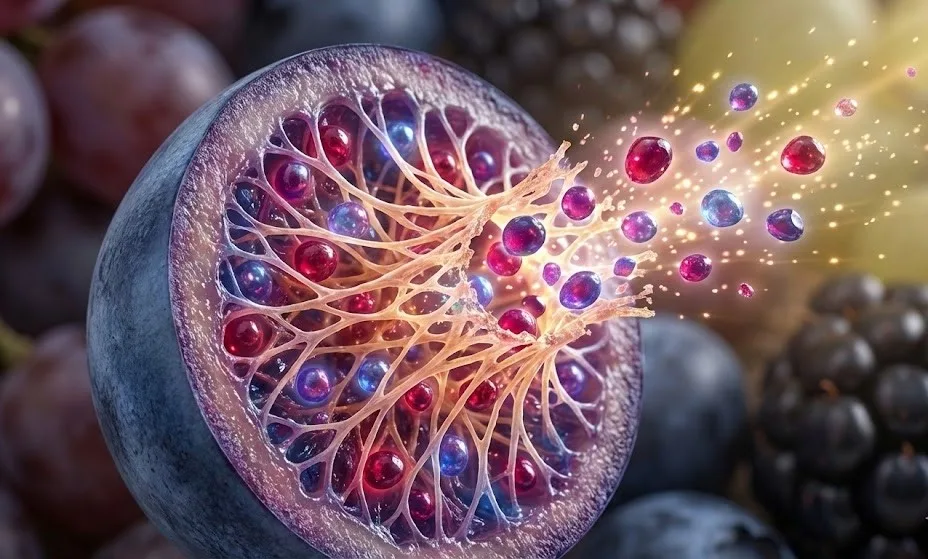
A significant portion—and often the majority—of plant polyphenols are structurally bound to dietary fiber and cell walls within the plant matrix. They are locked into the cellulose, hemicellulose, and pectin that give the plant its physical structure.
When an athlete consumes a whole berry, an apple with the skin, or fibrous greens, they are ingesting this entire matrix. When that same produce is put through a juicer, the machine efficiently separates the liquid (containing water, sugars, and free-floating polyphenols) from the pulp.
The pulp is the fiber. By discarding the pulp, the athlete is also discarding the "fiber-bound" polyphenols attached to it. They are getting the sugar spike without the structural brake, and they are missing out on a sustained-release reservoir of antioxidants.
The Microbiome: The Activation Chamber
The importance of eating the "bound" polyphenols goes beyond simple ingestion. These compounds rely on the human digestive system to be unlocked, a process that yields further benefits for athletic health.
Because the human small intestine cannot fully digest fiber, these bound polyphenols pass relatively intact into the colon. There, they encounter the gut microbiome. Beneficial gut bacteria possess the necessary enzymes to ferment the fiber and cleave the chemical bonds, releasing the trapped polyphenols.
This process does two things:
-
Sustained Release: Instead of a quick spike of antioxidants from juice, the colon provides a slow, sustained release of these compounds into the bloodstream over many hours, offering prolonged protection against oxidative stress.
-
Prebiotic Synergy: The fiber acts as a prebiotic, feeding beneficial bacteria. A healthy, diverse microbiome is increasingly linked to overall athletic performance, impacting everything from nutrient absorption and immune function to mental resilience.
By juicing and removing the fiber, the athlete starves their microbiome of its preferred fuel and misses this secondary activation phase of recovery nutrients.
Rethinking Performance Nutrition Strategies
While there may be a specific time and place for rapidly digesting liquid carbohydrates immediately post-competition to replenish glycogen stores quickly, it should not be the primary method of daily fruit and vegetable intake.
For long-term health, inflammation management, and sustained recovery, the "whole food matrix" is superior.
Athletes should prioritize consuming foods in their complete form. Smoothies, which retain the pulp, are a better alternative to juicing, though chewing whole food remains the gold standard for signaling satiety and managing glycemic response.
Ultimately, nutrition is not just about isolating chemical compounds. It is about the synergy of the food as it exists in nature. By embracing the whole food—fiber, structure, and all—athletes ensure they are utilizing the full spectrum of nutritional tools available for recovery and performance.