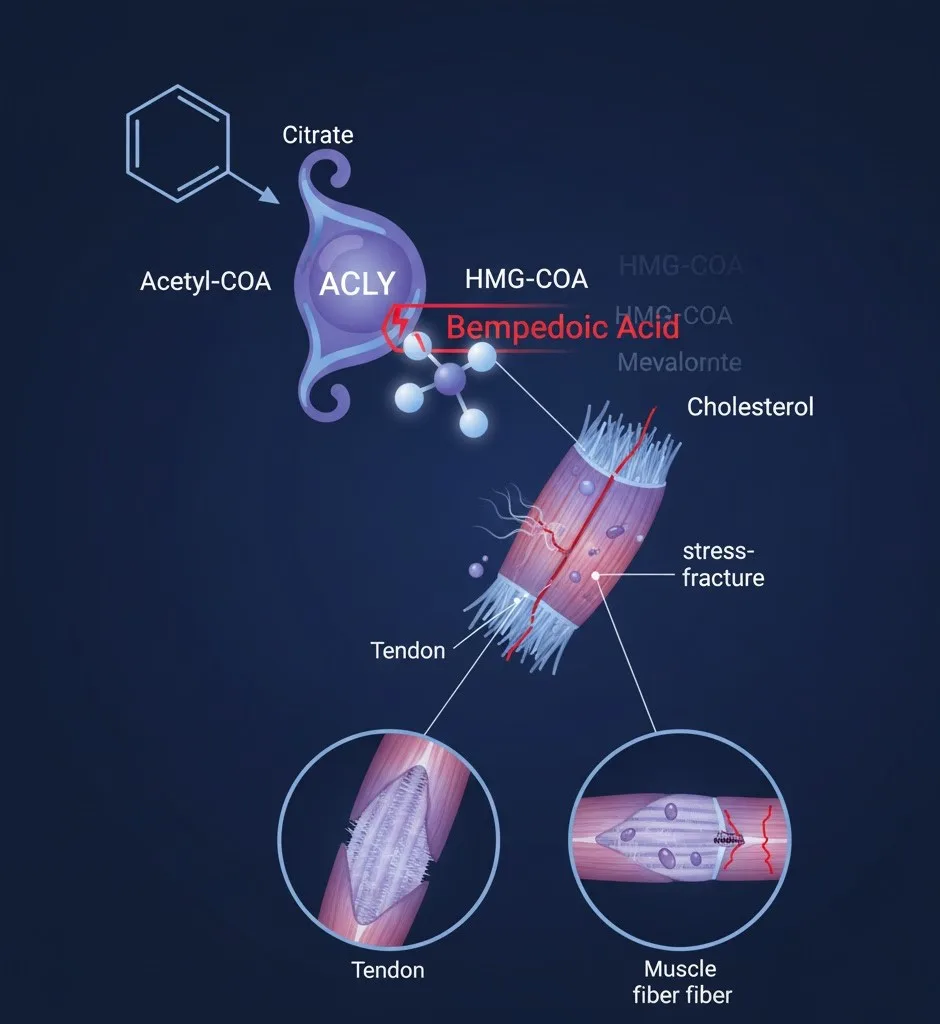

While regular exercise is a cornerstone of cardiovascular health, some athletes and physically active individuals require medication to manage high low-density lipoprotein cholesterol (LDL-C), often referred to as "bad cholesterol." These drugs, such as statins and the newer class of ATP Citrate Lyase (ACLY) inhibitors like Bempedoic acid (NEXLETOL®), are highly effective, but their mechanisms carry a unique set of risks that can be particularly relevant—and potentially debilitating—for athletes.
The Dual Threat to Athletic Tissue
Two key side effects of certain lipid-lowering medications pose significant challenges to athletes: muscle pain/damage and tendon injury.
1. Muscle-Related Complaints (Myalgia and Spasms)
The pathway these drugs target, the cholesterol synthesis pathway, is not exclusive to cholesterol production. The enzyme inhibition can indirectly affect other vital biological processes, leading to adverse effects on skeletal muscle tissue.
-
Statins are well-known for potentially causing muscle complaints (myalgia), which can range from mild soreness to severe pain. For an athlete, distinguishing between typical post-exercise soreness and drug-induced myalgia can be difficult, but the latter can compromise training intensity and recovery.
-
The use of Bempedoic acid has also been associated with side effects like muscle spasms and general muscle pain. In a competitive environment where peak performance depends on training consistency and muscle resilience, any drug that compromises muscle integrity is a significant concern.
2. The Critical Risk of Tendon Rupture
Perhaps the most alarming risk, especially for athletes whose careers rely on powerful, intact tendons (like the Achilles or rotator cuff), is the potential for tendinopathy and, in rare cases, spontaneous tendon rupture.
Bempedoic acid carries a warning regarding an increased risk of tendon rupture or injury. Tendons—the strong, fibrous cords connecting muscle to bone—are essential for all powerful movements in sports, from jumping in basketball to sprinting in track.
-
The Athletic Context: Athletes inherently place extreme, repetitive stress on their tendons. Introducing a medication that may compromise the tensile strength of these tissues dramatically increases the risk profile. A spontaneous rupture—occurring without a major traumatic impact—can be career-ending.
-
Key Areas: Reported ruptures often involve high-stress areas like the Achilles tendon (crucial for running and jumping) and the rotator cuff (essential for throwing and overhead sports).
Hyperuricemia and Gout: An Indirect Performance Killer
Another notable side effect of Bempedoic acid is an elevation in uric acid levels in the blood, a condition known as hyperuricemia.
-
Gout Risk: Elevated uric acid can precipitate gout, a form of inflammatory arthritis characterized by sudden, severe attacks of pain, redness, and swelling, often in the big toe joint.
-
Impact on Athletes: A gout flare-up can immobilize an athlete, causing a forced break from training and competition. For a professional or highly dedicated amateur, this unscheduled interruption can severely derail season goals and peak-condition readiness.
The Prescription for the Performance-Minded
For an athlete requiring lipid-lowering therapy, a specialized medical consultation is non-negotiable. The benefits of reducing cardiovascular risk must be carefully balanced against the immediate, tangible risks to athletic performance and career longevity.
-
Risk Assessment: A healthcare specialist should screen for any history of tendon disorders or previous ruptures before prescribing drugs like Bempedoic acid.
-
Patient Education: Athletes must be vigilant and educated on the warning signs. If they experience joint pain, sudden swelling, or a "snap or pop" in a tendon, they need to stop exercise immediately and seek urgent medical attention.
-
Alternative Strategies: Given the potential for muscle and tendon issues, the medical team may explore alternative LDL-C lowering strategies or carefully select the drug and dosage to minimize adverse musculoskeletal effects while maintaining cardiovascular benefit.
The pursuit of optimal health should never entirely sideline the pursuit of performance, but in the case of certain powerful lipid-lowering drugs, a cautious and informed approach is vital to protect the athlete's most valuable asset: their body.