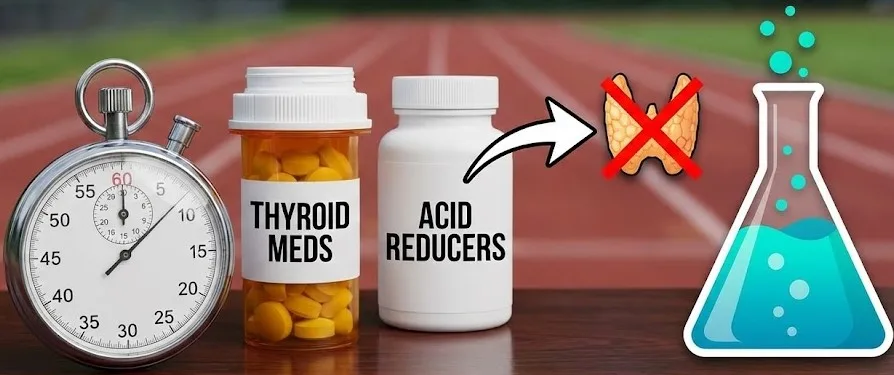

In the high-stakes world of competitive sports, athletes and coaches are obsessed with optimizing every variable: nutrition, training load, sleep hygiene, and recovery protocols. Yet, a significant threat to performance often hides in plain sight within the medicine cabinet. For athletes managing hypothyroidism with levothyroxine, a common class of medication used for digestive issues—Proton Pump Inhibitors (PPIs)—can silently undermine their metabolic foundation.
Understanding this drug interaction is crucial for any athlete reliant on exogenous thyroid hormones, as failure to manage it can lead to unexplained fatigue, stalled progress, and a mysterious decline in performance metrics.
The Metabolic Engine: Thyroid Function in Athletics
The thyroid gland is essentially the body's thermostat and metabolic engine. It produces hormones, primarily T4 (thyroxine) and T3 (triiodothyronine), that dictate how every cell utilizes energy.
For an athlete, optimal thyroid function is non-negotiable. It governs vital processes including:
-
Basal Metabolic Rate (BMR): How efficiently the body burns calories at rest.
-
Muscle Function: Affecting contraction speed and recovery rate.
-
Cardiovascular Response: Regulating heart rate and cardiac output during exertion.
-
Cognitive Function: Influencing focus, reaction time, and mental resilience.
Athletes with hypothyroidism (an underactive thyroid) are prescribed synthetic T4, known generically as levothyroxine, to restore these levels to a euthyroid (normal) state. When dosed correctly, the athlete should feel and perform normally.
The Gut Check: Why Athletes Rely on PPIs
Athletes are disproportionately prone to gastrointestinal distress. Intense physical exertion increases intra-abdominal pressure, which can force stomach acid upward, causing gastroesophageal reflux disease (GERD) or severe heartburn. Furthermore, the rigorous dietary demands of high-carb loading, or the frequent use of Non-Steroidal Anti-Inflammatory Drugs (NSAIDs like ibuprofen) for pain and inflammation, can wreak havoc on the stomach lining.
To combat this, many athletes turn to Proton Pump Inhibitors. Common medications in this class (such as omeprazole, pantoprazole, and esomeprazole) work by powerfully blocking the enzyme in the stomach wall that produces acid. They are highly effective at raising gastric pH, making the stomach environment less acidic and providing relief from reflux symptoms.
The Silent Clash: The Mechanism of Interaction
The conflict arises because levothyroxine is a finicky medication requiring specific conditions for optimal absorption. The tablet relies on the acidic environment of the stomach to dissolve properly and prepare for absorption in the small intestine.
When an athlete takes a PPI, stomach acid production is severely suppressed. The resulting increase in gastric pH (making the stomach more alkaline) significantly impairs the dissolution and subsequent bioavailability of the levothyroxine tablet.
The critical takeaway here is that this is not merely a matter of timing. While standard advice for some drug interactions is to space them out by several hours, PPIs are designed to have a long-lasting effect on stomach acidity, often suppressing acid production for 24 hours or longer. Therefore, simply taking the thyroid medication in the morning and the PPI at night may not fully resolve the absorption issue.
The Athletic Fallout: Performance Consequences
When PPIs inhibit levothyroxine absorption, serum levels of thyroid hormones drop. The athlete may technically be taking their prescribed dose, but their body is not receiving it. This can lead to a gradual return of hypothyroid symptoms, which are disastrous for athletic performance:
-
Unexplained Fatigue: A deep, persistent tiredness that doesn't resolve with sleep, making training sessions feel impossibly hard.
-
Reduced Power Output and Stamina: The metabolic machinery slows down, leading to earlier failure in endurance events and reduced explosiveness in power sports.
-
Delayed Recovery: Muscle soreness lasts longer, and the body repairs micro-trauma more slowly between sessions.
-
Weight Management Issues: Despite consistent training and diet, the athlete may experience creeping weight gain or an inability to cut body fat due to a suppressed metabolism.
-
Mental Fog: A decrease in sharp decision-making and focus during competition.
Often, these symptoms are misattributed to overtraining, poor diet, or stress, leaving the athlete chasing the wrong solutions while their hormonal balance deteriorates.
Navigating the Interaction: Strategies for the Athlete
Athletes who require both levothyroxine and acid-suppressing therapy must manage this interaction proactively with their medical team.
1. Total Transparency with Medical Staff: The team physician, endocrinologist, and sports dietician must all be aware of every medication and supplement being taken. The connection between a gastroenterologist prescribing a PPI and a primary care doctor prescribing levothyroxine is often missed without patient advocacy.
2. Rigorous Monitoring and Testing: If concurrent use is necessary, standard thyroid testing schedules are insufficient. When a PPI is introduced or its dosage changed, Thyroid Stimulating Hormone (TSH) levels must be closely monitored. It typically takes 6 to 8 weeks for thyroid levels to stabilize after a change in absorption dynamics. Retesting at this juncture is critical to ensure the athlete has not slipped back into a hypothyroid state.
3. Potential Dosage Adjustments: To counteract reduced absorption, the physician may need to increase the dosage of levothyroxine. This should only be done under strict medical supervision based on blood work.
4. Exploring Alternatives: Under medical guidance, it may be possible to switch from a PPI to an H2 blocker (like famotidine). While H2 blockers also reduce acid, their effect is shorter-acting and may have a less severe impact on levothyroxine absorption if doses are spaced appropriately. Alternatively, lifestyle and dietary interventions to manage GERD should be maximized to reduce reliance on acid suppressors.
Conclusion
For the treated hypothyroid athlete, levothyroxine is fuel for the fire. PPIs, while providing necessary relief for gut issues, can inadvertently dampen that fuel source. By understanding this chemical collision, maintaining rigorous blood testing, and communicating openly with medical support staff, athletes can ensure their metabolic engine remains tuned for peak performance, preventing a treatable gut issue from becoming a career-altering metabolic crisis.