The pursuit of peak athletic performance constantly drives innovation in sports nutrition. Beyond the foundations of proper training and diet, two naturally occurring compounds, L-Carnitine and D-Ribose, have emerged as key subjects in research concerning energy metabolism, endurance, and recovery for athletes. By targeting distinct but interconnected cellular processes, these supplements offer a compelling strategy for optimizing an athlete's physiological efficiency.
L-Carnitine: The Engine's Fat Shuttle
L-Carnitine is a vitamin-like molecule that is synthesized naturally in the body, but also obtained through the diet, primarily from red meat. Its fundamental role in human biology is critical for energy production, especially in tissues with high energy demands like skeletal and cardiac muscle.
Function in Athletics
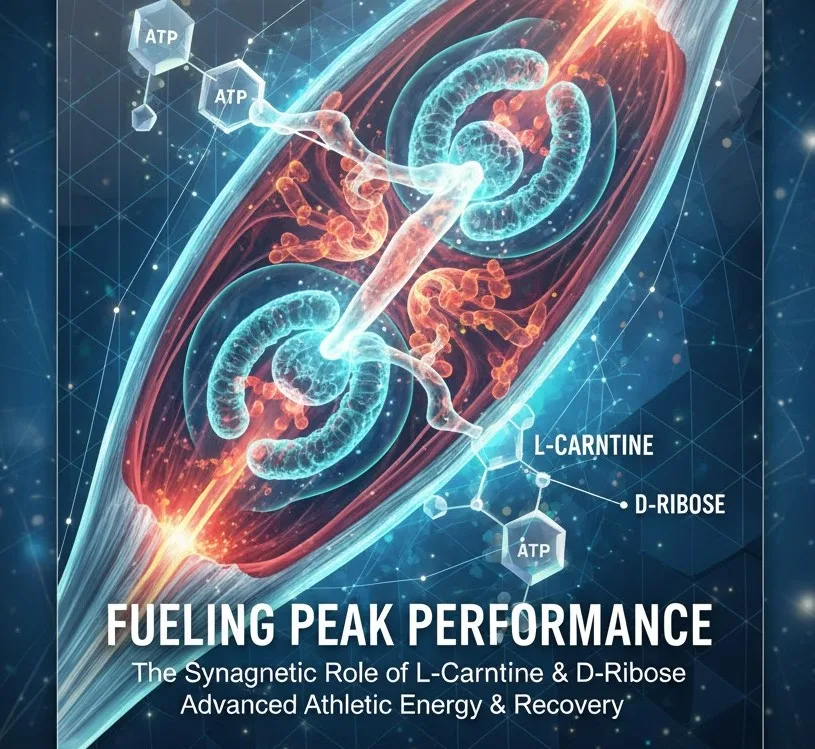
The primary function of L-Carnitine is to serve as a shuttle for long-chain fatty acids, transporting them from the cytosol, across the mitochondrial membrane, and into the mitochondria (the cell's "powerhouses"). Once inside, these fatty acids are oxidized—or "burned"—to generate Adenosine Triphosphate (ATP), the body's main energy currency.
In the context of endurance sports, maximizing fat oxidation is crucial because fat reserves are far more abundant than carbohydrate (glycogen) stores. By promoting the use of fat as fuel, L-Carnitine effectively spares muscle glycogen, delaying the onset of fatigue and potentially increasing an athlete's overall endurance capacity.
Beyond Energy: Recovery and Anti-Oxidation
The benefits of L-Carnitine extend past simply fueling the body. Studies suggest a role in recovery by reducing markers of cellular damage and oxidative stress following intense exercise. Supplementation has been shown to:
-
Reduce Muscle Soreness: By mitigating muscle injury and reducing the formation of free radicals.
-
Improve Blood Flow: Enhancing oxygen supply to muscle tissue through improved endothelial function.
-
Attenuate Metabolic Stress: Reducing the accumulation of plasma lactate and ammonia, which are associated with fatigue.
D-Ribose: The Blueprint for Energy Regeneration
While L-Carnitine focuses on the fuel for energy production, D-Ribose targets the machinery of energy itself. D-Ribose is a five-carbon sugar that serves as an essential building block for ATP.
The Recovery Catalyst
During periods of high-intensity, prolonged, or repeated strenuous exercise, the body's ATP levels can become severely depleted. The process of rebuilding ATP, particularly its ribose component, can be a slow, limiting factor in full muscle recovery, sometimes taking days.
D-Ribose supplementation accelerates the rate at which the body can resynthesize ATP. By providing the necessary raw material for the ATP molecule, D-Ribose supports the rapid restoration of the muscle's energy pools. This is especially beneficial for athletes engaged in multi-day competitions, intense training cycles, or sports requiring repeated bouts of explosive effort, where quick energy recovery is paramount to maintaining performance.
The Challenge of Bioavailability and Synergistic Intake
A significant challenge in utilizing L-Carnitine as a standalone supplement is its low oral bioavailability; only a small percentage of an ingested dose typically reaches the muscle tissue. To overcome this, research has focused on combining it with other compounds that can enhance its uptake.
-
Insulin-Mediated Uptake: The most effective method for increasing L-Carnitine's concentration in muscle tissue is to consume it alongside a substantial amount of carbohydrates. The resulting insulin spike acts as a key, unlocking the muscle cell's carnitine transporter and driving the supplement into the tissue where it can perform its function.
-
Combined with D-Ribose and Creatine: When coupled with compounds like D-Ribose and Creatine, a powerful synergistic effect is created.
-
L-Carnitine facilitates the utilization of fat to spare glycogen.
-
D-Ribose ensures the rapid rebuilding of the energy molecule (ATP) that powers the muscle contraction.
-
Creatine provides a readily available phosphate group to quickly recharge ADP back into ATP during immediate, high-power efforts.
-
This combined approach addresses the three critical pillars of metabolic function for the athlete: fuel transport, rapid energy regeneration, and immediate power buffering.
Conclusion
For athletes operating at the limits of their physical capacity, optimizing cellular energy pathways is a continuous goal. L-Carnitine and D-Ribose are distinct supplements that offer complementary roles: L-Carnitine supports sustained endurance and efficient recovery by boosting fat metabolism and reducing cellular stress, while D-Ribose is a key factor in accelerating the regeneration of fundamental muscle energy stores (ATP). By focusing not only on the raw materials but also on enhancing their absorption and utilization, sports nutrition continues to provide science-backed tools for athletes seeking a competitive edge.