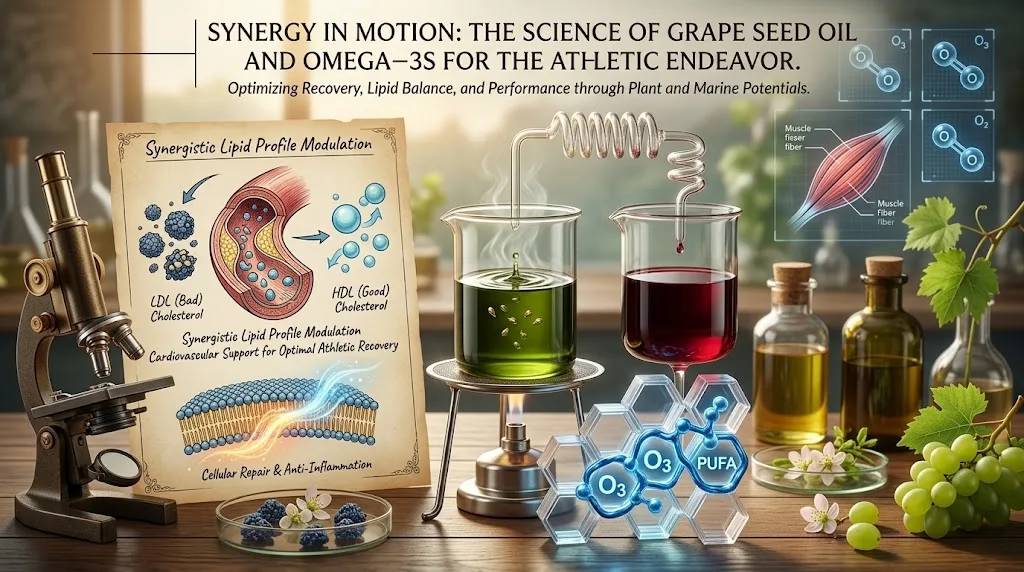
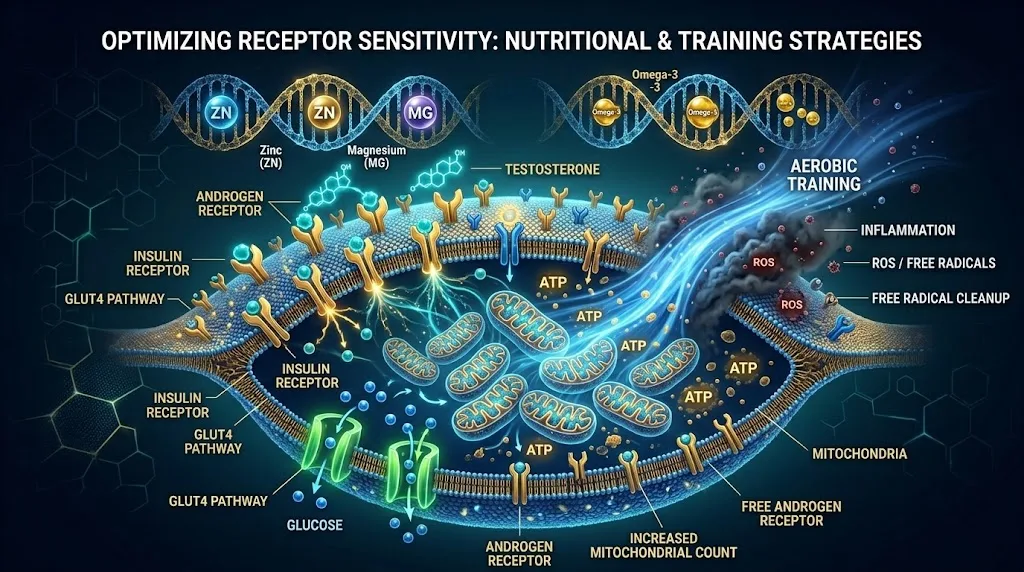
In the realm of sports nutrition, athletes and coaches often fixate on macronutrient ratios—fine-tuning carbohydrates for fuel and protein for muscle repair. However, a crucial biochemical aspect of performance is frequently overlooked: the precise balance of dietary fats. Beyond simply providing energy, fatty acids act as powerful signaling molecules that regulate inflammation, cellular health, and recovery kinetics. Understanding the complex interplay between Omega-3, Omega-6, and Omega-9 fatty acids, and the enzymes that process them, is essential for optimizing athletic resilience.
The human body is capable of synthesizing many necessary fats, but it relies on dietary intake for essential polyunsaturated fatty acids (PUFAs). When an athlete's diet lacks sufficient essential PUFAs—particularly the long-chain variants found in marine sources—the body attempts to compensate. This deficiency stimulates the expression of an enzyme known as Delta-9 desaturase.
The primary role of Delta-9 desaturase is to convert saturated fats into monounsaturated fats, leading to an increased synthesis of non-essential fatty acids, specifically Omega-9s (like oleic acid). While Omega-9s are not inherently harmful and serve vital functions, an overreliance on endogenous production signals a nutritional gap. For the athlete, this compensatory mechanism indicates suboptimal fueling. The goal of performance nutrition is to provide the body with essential building blocks directly, rather than forcing it to divert resources toward compensatory synthesis pathways.
A far more critical issue for athletic performance, however, lies in the competition for metabolic enzymes between Omega-6 and Omega-3 fatty acids. This is where the modern Western diet frequently sabotages recovery goals.
Both Omega-6 and Omega-3 fatty acids require the same family of enzymes—desaturase and elongase enzymes—to be metabolized into their active forms. Omega-3s, particularly the plant-based form alpha-linolenic acid (ALA), must be converted via these enzymes into eicosapentaenoic acid (EPA) and docosahexaenoic acid (DHA). EPA and DHA are the potent anti-inflammatory powerhouses crucial for dampening exercise-induced inflammation and promoting cardiovascular health.
The problem arises when the intake of Omega-6 fatty acids is excessively high. Omega-6s, prevalent in many vegetable oils (such as corn, soybean, and sunflower oil) and processed foods, are biologically necessary but pro-inflammatory when consumed in excess. Because Omega-6s and Omega-3s compete for the same desaturase and elongase enzymes, a high influx of Omega-6 literally "saturates" the metabolic machinery.
Consequently, an athlete consuming a diet high in processed vegetable oils significantly inhibits their body's ability to convert plant-based ALA into the critical EPA and DHA. An athlete might consume flaxseeds or chia seeds hoping for anti-inflammatory benefits, but if their Omega-6 intake is too high, the enzymatic pathway is blocked, rendering the conversion inefficient and stalling recovery processes.
For the athlete, the implications of this imbalance are profound. Cellular membranes, including those in muscle tissue, are composed of a lipid bilayer. The ratio of fatty acids incorporated into these membranes dictates their fluidity and function. A balance heavily skewed toward Omega-6 leads to more rigid membranes and a heightened pro-inflammatory state, potentially exacerbating muscle soreness (DOMS) and delaying recovery between training sessions. Conversely, membranes rich in EPA and DHA exhibit better fluidity, facilitating optimal nutrient transport and signaling, while providing the necessary precursors to resolve inflammation efficiently.
Therefore, achieving a strategic balance in the consumption of Omega-3, 6, and 9 fatty acids is not merely a general health recommendation; it is a cornerstone of performance nutrition. Athletes must move beyond viewing fats solely as a caloric density issue and recognize them as potent modulators of their biochemistry. Prioritizing direct sources of EPA and DHA while actively reducing excessive Omega-6 intake ensures that the body's enzymatic pathways are free to support recovery and adaptation, rather than being perpetually clogged in a pro-inflammatory state.

January 7, 20263 min
How Fatty Acid Balance Dictates Athletic Recovery and Performance

FitKolik
Published on January 7, 2026
Critical balance of Omega-3, Omega-6, and Omega-9 fatty acids for athletes, explaining enzymatic competition and how to optimize fat intake for recovery and performance.