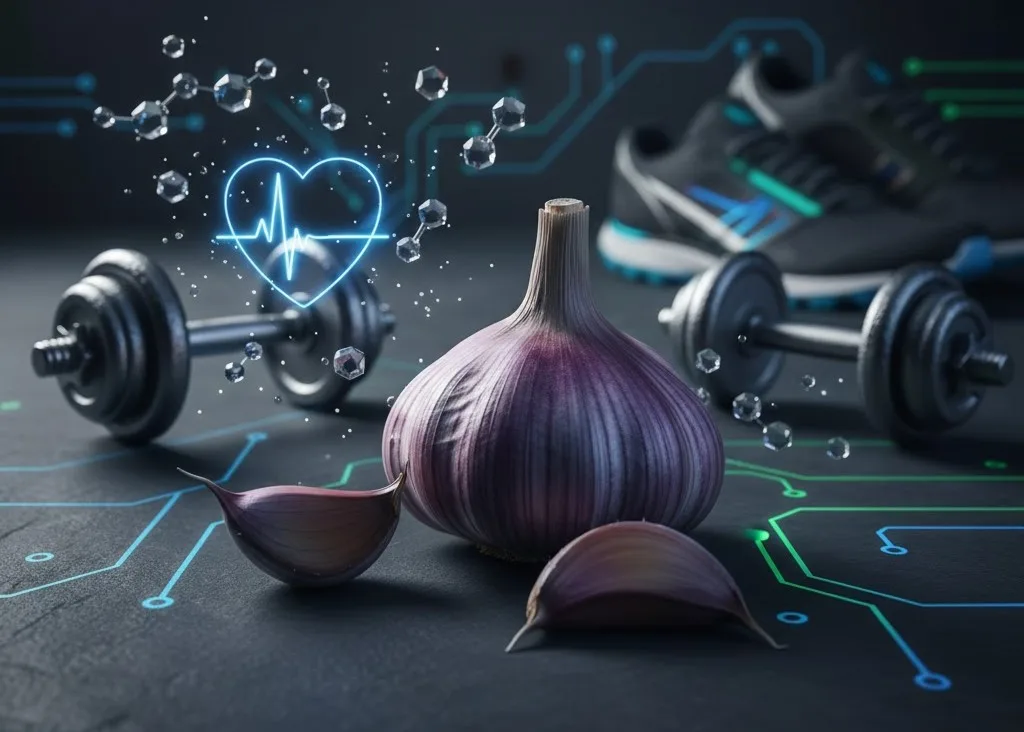

In the pursuit of peak physical performance, athletes often walk a fine line between physiological optimization and systemic strain. While training regimens and nutrition form the bedrock of athletic success, the use of ergogenic aids—and in some cases, performance-enhancing drugs (PEDs)—can introduce significant cardiovascular and metabolic risks. Amidst this landscape, a humble culinary staple has emerged as a potent pharmacological ally: garlic (Allium sativum).
Beyond its flavor, garlic is a complex pharmaceutical factory. Its primary bioactive compound, allicin, along with various organosulfur derivatives, offers a range of cardioprotective and performance-enhancing benefits that are increasingly relevant to modern athletes.
Cardiovascular Defense and "On-Cycle" Support
For athletes who push their bodies to extremes, the cardiovascular system is often the first to bear the brunt of the stress. Anabolic-androgenic steroid (AAS) use, in particular, is notorious for inducing a highly atherogenic lipid profile, characterized by:
-
Suppressed HDL: The "good" cholesterol often drops to dangerously low levels.
-
Elevated LDL: "Bad" cholesterol rises, increasing the risk of arterial plaque.
-
Arterial Stiffness: Steroids and intense chronic training can reduce the elasticity of blood vessels.
Research into garlic supplementation suggests it may serve as a critical "on-cycle" therapy (OCT). Studies indicate that garlic extract can help normalize lipid profiles by inhibiting cholesterol synthesis in the liver. Furthermore, garlic acts as a natural vasodilator; by stimulating the production of nitric oxide and hydrogen sulfide, it helps relax blood vessels, thereby managing the hypertension often associated with high-intensity training and PED use.
Ergogenic Benefits: Beyond the Heart
Garlic’s utility extends directly into the field of play. Its impact on aerobic capacity and recovery is supported by several physiological mechanisms:
-
Enhanced VO_2 Max: Clinical trials have shown that acute and chronic garlic ingestion can lead to a significant increase in maximal oxygen consumption (VO_2 max). This is likely due to improved blood fluidity and reduced blood viscosity, allowing for more efficient oxygen delivery to working muscle tissues.
-
Lactate Threshold and Recovery: By improving arterial flexibility and reducing oxidative stress, garlic has been shown to improve lactate thresholds. This allows endurance athletes to maintain higher power outputs for longer durations before the onset of muscle fatigue.
-
Glycogen Replenishment: Recent studies suggest that post-exercise garlic supplementation may enhance the replenishment of muscle glycogen, a critical factor for athletes engaging in multiple training sessions per day.
Clinical Reality vs. Athletic Hype
While the benefits are compelling, it is essential to distinguish between a "supplement" and a "cure." Garlic can mitigate certain markers of oxidative stress and inflammation—specifically reducing C-reactive protein (CRP) and interleukin-6 (IL-6)—but it cannot fully neutralize the structural damage to the heart or kidneys caused by long-term steroid abuse.
| Parameter | Benefit of Garlic Supplementation |
| Blood Pressure | Significant reduction in systolic/diastolic pressure via vasodilation. |
| Lipid Profile | Moderate reduction in Total Cholesterol and LDL; variable impact on HDL. |
| Oxidative Stress | High; increases total antioxidant capacity (TAC) and reduces malondialdehyde (MDA). |
| Performance | Modest increase in VO_2 max and improved recovery times. |
Conclusion
Garlic stands as one of the most research-backed natural supplements for the modern athlete. Whether used as a prophylactic measure to support cardiovascular health during periods of intense physiological stress or as an ergogenic aid to boost aerobic efficiency, its role in a high-performance protocol is well-justified. However, for those using it to offset the risks of PEDs, it should be viewed as a single component of a much broader harm-reduction strategy, never a substitute for medical supervision.