
For athletes, maintaining peak physical condition is paramount, extending far beyond the training field. While performance-enhancing substances often dominate headlines, common medications used to address everyday health concerns can also have significant implications for competitive sport. Among these, Finasteride and Minoxidil—widely used treatments for androgenetic alopecia (male-pattern baldness)—warrant a deeper look due to their distinct mechanisms and potential effects on an athlete's physiology, drug testing status, and psychological well-being.
Finasteride: The Hormonal Tightrope
Finasteride is an anti-androgen compound that works by inhibiting the enzyme 5-alpha reductase (5-AR). This enzyme is responsible for converting the potent androgen Testosterone (T) into Dihydrotestosterone (DHT). Since DHT is the primary hormone responsible for shrinking hair follicles and causing baldness, Finasteride effectively reduces its concentration in the scalp and systemically.
Athletic and Regulatory Concerns
The relationship between Finasteride and sport is complex, centered on its interaction with the endocrine system:
-
Testosterone and DHT: While Finasteride primarily lowers DHT, it often leads to a compensatory increase in circulating Testosterone levels, as the conversion pathway is partially blocked.
-
The Masking Effect: Historically, Finasteride has been a substance of interest to the World Anti-Doping Agency (WADA) because of its potential "masking" properties. By altering the ratio of Testosterone to its metabolites in urine, high systemic Finasteride levels could theoretically obscure the use of exogenous (synthetic) Testosterone or other anabolic steroids in anti-doping tests. WADA previously prohibited Finasteride, but removed it from the Prohibited List in 2009 after advancements in testing allowed labs to more reliably distinguish between finasteride use and steroid doping. Athletes must still be aware of this historical context and ensure their anti-doping organizations are informed of its use, as reporting requirements vary.
-
Performance Impact: The systemic suppression of DHT raises questions about muscle function. DHT plays a role in muscle strength and central nervous system activity, though less studied than Testosterone. For athletes in sports demanding maximal strength or explosive power, any interference with the androgenic pathways, even primarily targeting DHT, is a point of concern, although significant performance detriments are generally not widely reported with standard doses.
Minoxidil: The Vasodilation Advantage
Minoxidil, by contrast, operates through a non-hormonal mechanism. Originally developed as an oral medication for hypertension, it was found to have the side effect of hypertrichosis (excessive hair growth). Its topical application is believed to stimulate hair growth by:
-
Vasodilation: It is a potent vasodilator, meaning it widens blood vessels. This increases blood flow to the scalp, delivering more oxygen, nutrients, and hormones to the hair follicles, which are essentially highly metabolic organs.
-
Follicle Stimulation: It is thought to increase the duration of the anagen (growth) phase of the hair cycle and potentially stimulate resting follicles.
Athletic Relevance
Minoxidil is generally considered a low-risk substance in the athletic world:
-
Doping Status: Topical Minoxidil is not on the WADA Prohibited List. Its mechanism of action has no known performance-enhancing properties.
-
Systemic Absorption: When applied topically, systemic absorption is typically low. However, high doses or damaged skin barriers could increase systemic exposure. For an athlete, particularly those dealing with dehydration or rapid weight cutting, any systemic absorption could theoretically impact blood pressure and heart rate, though this is rare at standard topical doses.
The Synergistic Combination: Topical Application
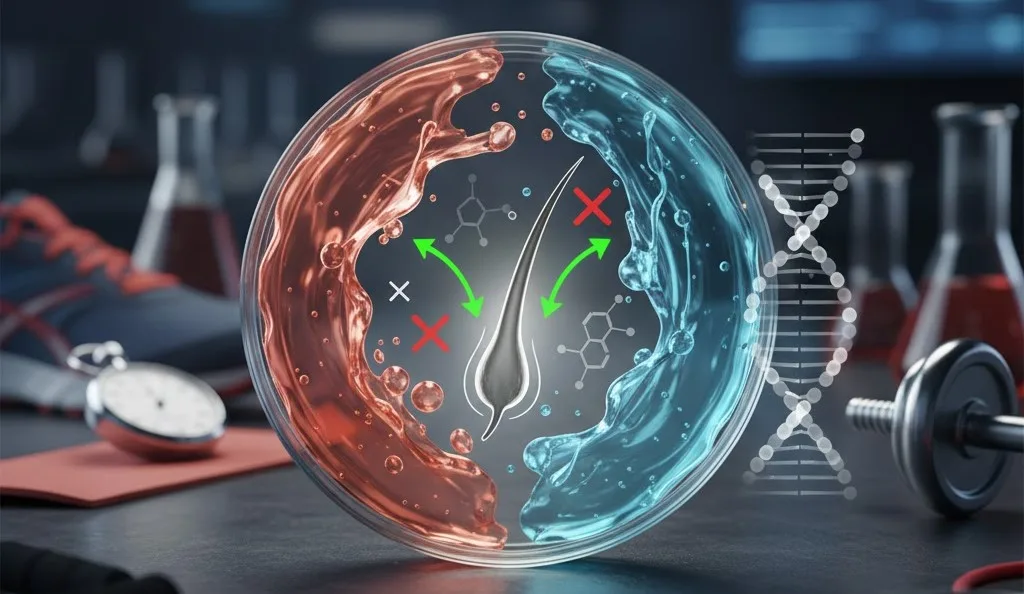
The images you provided suggest a protocol for combining Finasteride with Minoxidil for topical delivery. This approach reflects a growing desire to maximize therapeutic benefit while minimizing systemic side effects.
The principle is simple:
By applying Finasteride directly to the scalp, the concentration of the drug is maximized locally, targeting the hair follicles while significantly reducing the amount that enters the general bloodstream. This strategy attempts to mitigate the hormonal side effects (erectile dysfunction, mood changes) that occur when systemic DHT levels are suppressed throughout the body.
Psychological and Mental Health Impact
Finally, the discussion of hair loss treatments is incomplete without acknowledging the profound psychological toll hair loss can take, especially on athletes whose image is closely tied to public perception and self-confidence.
-
Confidence and Performance: For athletes, confidence is a critical performance factor. Addressing hair loss can lead to improved self-esteem and focus, indirectly benefiting their training and competitive performance.
-
Risk Mitigation: Choosing a topical, less systemic treatment option may provide a psychological benefit by reducing the anxiety associated with hormonal side effects and potential interference with their athletic regimen.
In conclusion, the decision to use Finasteride, Minoxidil, or a combination of the two involves a careful risk-benefit analysis for any individual, but particularly for a competitive athlete. While Minoxidil presents minimal athletic risk, Finasteride requires a measured approach, full awareness of its interaction with the endocrine system, and transparency with anti-doping authorities. The emerging trend of topical combination therapy is an attempt to optimize this balance, allowing athletes to address a personal health concern without compromising their career or their clean sport status.