The question posed highlights a common concern among individuals using supplements or performance-enhancing drugs: the potential impact of exogenous (external) substances on the body's endogenous (internal) production. While the premise correctly identifies a significant issue with testosterone, it draws an interesting, albeit often misunderstood, parallel to creatine. This article will delve into the distinct physiological mechanisms at play for each substance, explaining why the body's response to cessation differs so markedly.
The Case of Exogenous Testosterone and Endogenous Suppression
Testosterone is a primary male sex hormone, crucial for the development of male reproductive tissues, as well as secondary sexual characteristics like increased muscle mass, bone density, and body hair. Its production is tightly regulated by a complex feedback loop involving the hypothalamus, pituitary gland, and testes, known as the Hypothalamic-Pituitary-Gonadal (HPG) axis.
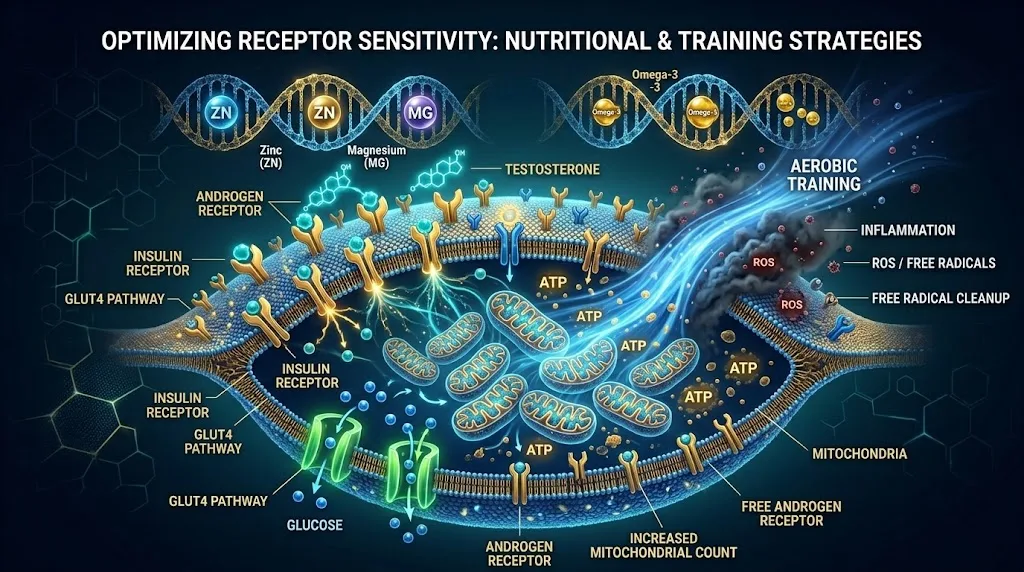
When an individual introduces exogenous testosterone into their system, the body's sensitive HPG axis detects the elevated levels of the hormone. In response, the hypothalamus reduces its production of Gonadotropin-Releasing Hormone (GnRH), which in turn signals the pituitary gland to decrease its output of Luteinizing Hormone (LH) and Follicle-Stimulating Hormone (FSH). LH and FSH are the crucial hormones responsible for stimulating testosterone production in the testes.
This suppressive effect is a natural homeostatic mechanism designed to prevent excessive hormone levels. However, when the exogenous testosterone is abruptly discontinued, the HPG axis, having been suppressed, does not immediately "kick back in" to full function. This leads to a period where the body's natural testosterone production is significantly diminished or even halted, resulting in symptoms of low testosterone such as fatigue, decreased libido, loss of muscle mass, and mood disturbances. The recovery period for endogenous testosterone production can vary widely among individuals, often taking weeks or even months for the HPG axis to fully regain its pre-exogenous function. This is precisely the "problem" referred to in the initial statement.
The Case of Exogenous Creatine and Endogenous Production
Creatine is a naturally occurring organic compound synthesized in the liver, kidneys, and pancreas from amino acids (arginine, glycine, and methionine). It plays a vital role in energy production, particularly during high-intensity, short-duration activities, by rapidly regenerating adenosine triphosphate (ATP), the body's primary energy currency. Approximately 95% of the body's creatine stores are found in skeletal muscle.
Unlike testosterone, the body's regulation of creatine production and storage operates on a fundamentally different principle. While creatine supplementation significantly increases intramuscular creatine stores, there is no evidence to suggest that it causes a long-term suppression or cessation of the body's natural creatine synthesis.
When an individual supplements with creatine, the increased dietary intake leads to a saturation of muscle creatine stores. Once these stores are maximized, the body's natural production simply adjusts to the new equilibrium, but it does not shut down the enzymatic pathways responsible for creatine synthesis.
Upon cessation of creatine supplementation, the elevated intramuscular creatine levels gradually decline over several weeks as the body excretes excess creatine and continues its normal metabolic processes. During this period, the body's endogenous creatine production continues unabated. There is no "withdrawal" period analogous to testosterone cessation because the natural feedback mechanisms for creatine production are not suppressive in the same way. The body simply returns to its baseline creatine production rate and muscle saturation levels. Individuals might notice a slight decrease in strength or endurance if they were heavily reliant on the enhanced creatine stores, but this is due to the return to baseline, not a deficiency caused by suppressed endogenous production.
Conclusion
The core difference lies in the body's regulatory mechanisms. Testosterone, being a potent hormone with wide-ranging systemic effects, is subject to strict negative feedback loops to maintain hormonal balance. Introducing external testosterone bypasses and suppresses these natural control systems. Creatine, while important for energy metabolism, is a nutrient whose endogenous production is not subject to the same kind of suppressive feedback from exogenous intake.
Therefore, the concern about the body "stopping production" of creatine after supplementation, mirroring the issue with testosterone, is unfounded. While exogenous testosterone necessitates a careful approach to recovery of natural hormone function, creatine supplementation can be initiated and discontinued without fear of permanent or significant impairment to the body's innate capacity to synthesize this essential compound. Understanding these distinct physiological pathways is crucial for making informed decisions about supplementation and health.