
In the world of competitive sports, the difference between a podium finish and an also-ran often comes down to marginal gains. While training volume and nutrition are frequently discussed, one physiological factor remains the ultimate gatekeeper of performance: the blood's ability to transport oxygen. Anemia, often dismissed as a general health concern, is a critical metabolic hurdle that can derail even the most disciplined athlete.
The Physiology of Performance
At the center of athletic endurance is the red blood cell (RBC). Within these cells lies hemoglobin, a protein that binds to oxygen in the lungs and delivers it to working muscles. During high-intensity exercise, the demand for oxygen increases exponentially. If the concentration of hemoglobin or the total volume of RBCs is low—a condition known as anemia—the "oxygen engine" begins to fail.
Athletes with low blood markers often experience:
-
Early onset of lactic acid buildup.
-
Increased resting and sub-maximal heart rates (palpitations).
-
Extended recovery times between training sessions.
-
Unexplained "heavy legs" and shortness of breath.
The Athlete’s Paradox: Why Pros are at Higher Risk
Ironically, the very act of training can induce a state known as Sports Anemia or "dilutional pseudo-anemia." As an athlete’s aerobic capacity improves, their plasma volume expands. While this is a positive adaptation for cooling and stroke volume, it can dilute the concentration of red blood cells, making an athlete appear anemic on a standard CBC (Complete Blood Count) test even if their total red cell mass is functional.
However, true clinical anemia in athletes is often caused by more aggressive factors:
1. Foot-Strike Hemolysis
Running on hard surfaces causes the physical rupture of red blood cells within the small blood vessels of the feet. This mechanical trauma, though microscopic, can lead to significant iron loss over a long competitive season.
2. Hepcidin and the "Iron Window"
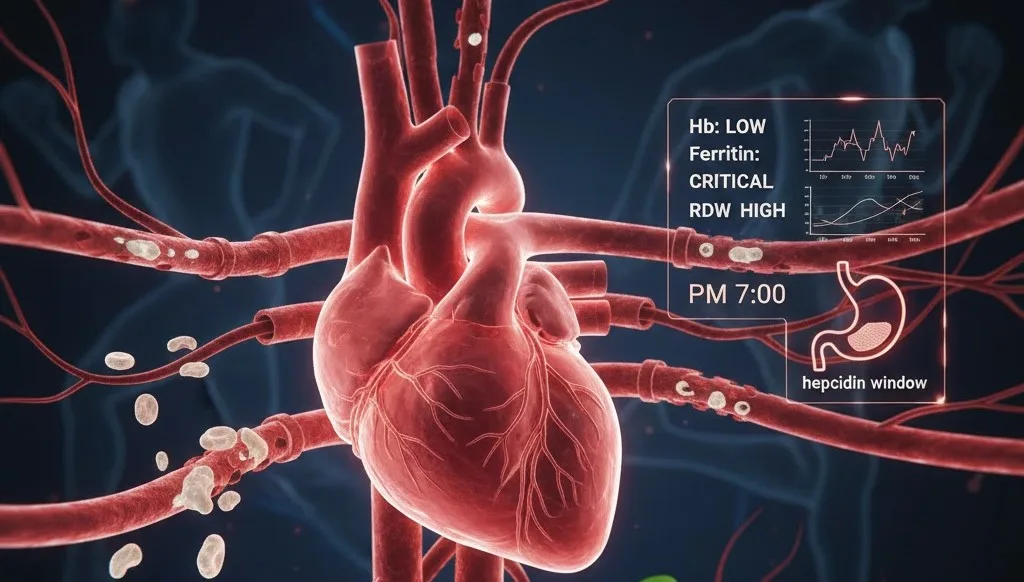
Intense exercise triggers inflammation, which increases a hormone called hepcidin. High levels of hepcidin block iron absorption in the gut for several hours post-exercise. If an athlete consumes their iron-rich meal immediately after a grueling workout, they may not be absorbing the nutrients they need.
3. Nutrient Deficiencies beyond Iron
While iron is the most famous culprit, optimal blood health requires a complex "cocktail" of nutrients:
-
Vitamin B12 and Folate: Essential for the synthesis of DNA and the production of new RBCs.
-
Magnesium: Vital for ATP (energy) production and muscle function.
-
Vitamin C: Necessary to convert non-heme iron into a form the body can actually use.
Diagnostic Markers: Beyond the Surface
For an athlete, a basic "normal" lab result may not be "optimal." A standard blood panel should be scrutinized through a sports-specific lens:
| Marker | Importance for Athletes |
| Ferritin | Represents iron stores. An athlete may have "normal" hemoglobin but low ferritin, leading to "non-anemic iron deficiency" which still impairs performance. |
| MCV (Mean Corpuscular Volume) | Measures the size of the cells. Large cells might indicate B12/Folate issues, while small cells usually point to iron deficiency. |
| RDW (Red Cell Distribution Width) | Shows the variation in cell size. A high RDW is often the first "early warning" sign of a nutritional deficiency before anemia fully develops. |
| G6PD | An enzyme that protects RBCs. Deficiency can lead to sudden cell breakdown under the stress of certain foods or infections. |
Strategy for Recovery and Prevention
Managing anemia in a sporting context requires a multi-faceted approach. Supplements are rarely a "silver bullet" and should only be used after confirming a deficiency through bloodwork (like TSH for thyroid or AST/ALT for liver function), as excess iron can be toxic and cause oxidative stress.
Key interventions include:
-
Periodized Testing: Testing blood at the start of the off-season, mid-season, and before major competitions.
-
Strategic Timing: Consuming iron-rich foods or supplements away from "hepcidin windows" and avoiding calcium or caffeine (which block absorption) during those meals.
-
Monitoring Training Load: Recognizing that persistent fatigue and heart palpitations are not always signs of "working hard" but may be signs of a physiological breakdown.
In summary, the blood is the delivery system for every breath an athlete takes. By treating blood health with the same rigor as tactical drills or strength training, athletes can ensure their engine is fully fueled and ready for the demands of elite competition.